

There’s a moment I see in almost every Australian couples Bali wedding I photograph. It happens somewhere between the ceremony and the reception — maybe during a quiet walk through a temple courtyard, or when the late afternoon light turns golden over the rice fields. They look at each other, and you can see it: this is exactly where we were meant to do this.
I’ve been photographing weddings in Bali since 2010. A significant portion of the couples I work with come from Australia. And after more than a decade behind the lens, I’ve stopped wondering why Australians choose Bali. I’ve started understanding it in ways most wedding guides never talk about.
This isn’t a list of obvious reasons. This is an honest look at what actually draws Australian couples to Bali — and why so many of them tell me, usually during the reception, that they’d make the same choice all over again.
Why Bali? For Australian Couples, a Bali Wedding Feels Like a Different World
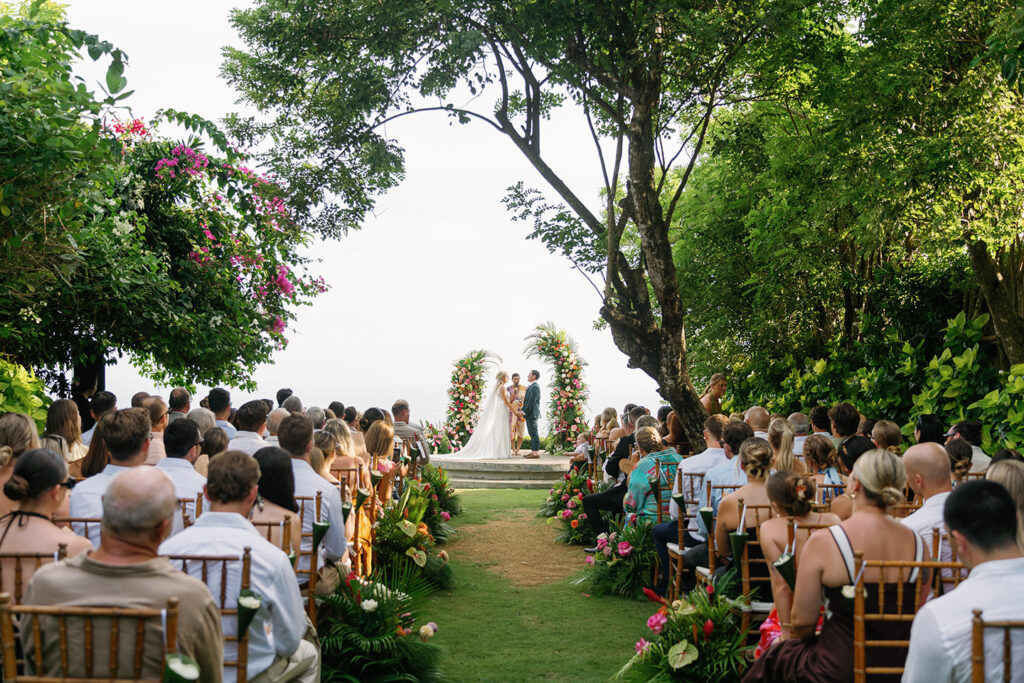
The flight from Sydney, Melbourne, or Perth to Bali is somewhere between three and five hours depending on where you’re departing from. That’s shorter than a domestic flight to Queensland for some couples. Yet the moment you land in Denpasar, everything shifts — the air, the light, the pace of life.
This proximity-to-magic ratio is something Australian couples talk about constantly. You’re not spending two days in transit before your wedding week even begins. You arrive, you exhale, and within an hour you’re somewhere that feels genuinely unlike anywhere at home. The streets smell of incense. Offerings sit at the base of temple gates. The light is different — warmer, more golden, even in the middle of the day.
For many Australian couples, Bali is already a place they know and love. They’ve been here for holidays, for surf trips, for that first big overseas adventure after school. There’s a familiarity that takes the edge off destination wedding planning. They’re not navigating a completely unknown culture — they’re bringing the people they love to a place that already means something to them.
For Lauren and Dan, who came from Melbourne, this was a deciding factor. They’d looked at venues in Europe and even considered New Zealand. But the idea of their closest family and friends making a 24-hour journey just felt like too much to ask. Bali made it possible for Lauren’s parents, her grandmother, and her closest friends to all be there — without anyone feeling like they’d crossed the planet to attend.
That accessibility matters enormously when you’re planning a destination wedding. The decision isn’t just yours. It’s also your guests’. And when your guests can step off a short flight and be at a stunning villa by lunchtime, the whole experience starts on the right foot.
The Value Is Genuinely Unmatched
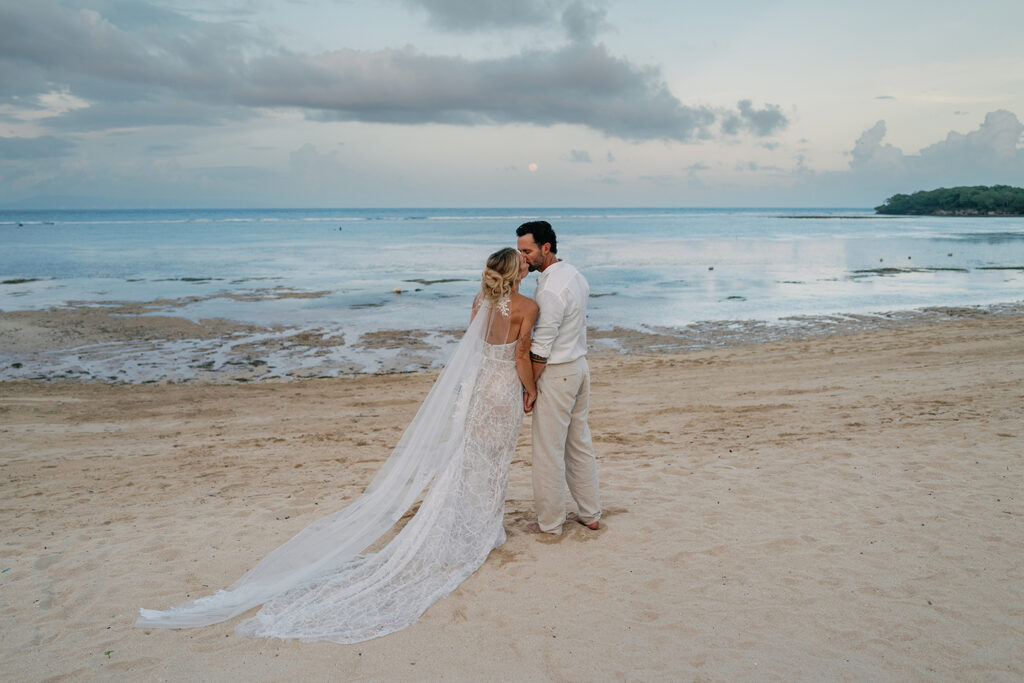
Let me be direct about something that often goes unspoken in wedding content: Bali offers a level of elegance and production quality that would cost three to four times as much in Australia.
A villa with a private pool, a dedicated coordinator, florals that would make a Sydney florist’s jaw drop, a seated dinner for eighty guests with a full catering team — in Bali, this is achievable on a budget that, in Australia, might get you a reception hall and a DJ.
The exchange rate is part of it. But it goes deeper than that. The ecosystem of wedding vendors in Bali — florists, caterers, stylists, lighting designers, cake makers — has been built specifically around international couples with high expectations. The quality is genuinely world-class. And because the cost of living here is lower, that quality is available at a fraction of what you’d pay at home.
Think about what a typical Australian wedding budget covers: a venue hire fee that alone can run $10,000–$20,000, catering at $150–$250 per head, a photographer, a celebrant, florals, a cake, hair and makeup, a DJ or band. By the time you’ve ticked all the boxes, you’re looking at $50,000–$80,000 for a modest celebration.
In Bali, the same budget — sometimes less — can get you a private clifftop venue, a team of vendors who’ve done this hundreds of times, florals that fill an entire ceremony space, and a photography team covering the full day. The gap is significant, and Australian couples who’ve done the research know it.
Aimee and Blake understood this well. They’d originally planned a wedding in the Hunter Valley wine region — beautiful in its own right, but stretching their budget uncomfortably. When they started pricing venues in Uluwatu and realised they could have a clifftop ceremony with panoramic ocean views, a stunning reception, and still have budget left for a proper honeymoon, the decision became straightforward.
Bali Has Genuine Wedding Infrastructure for Australian Couples
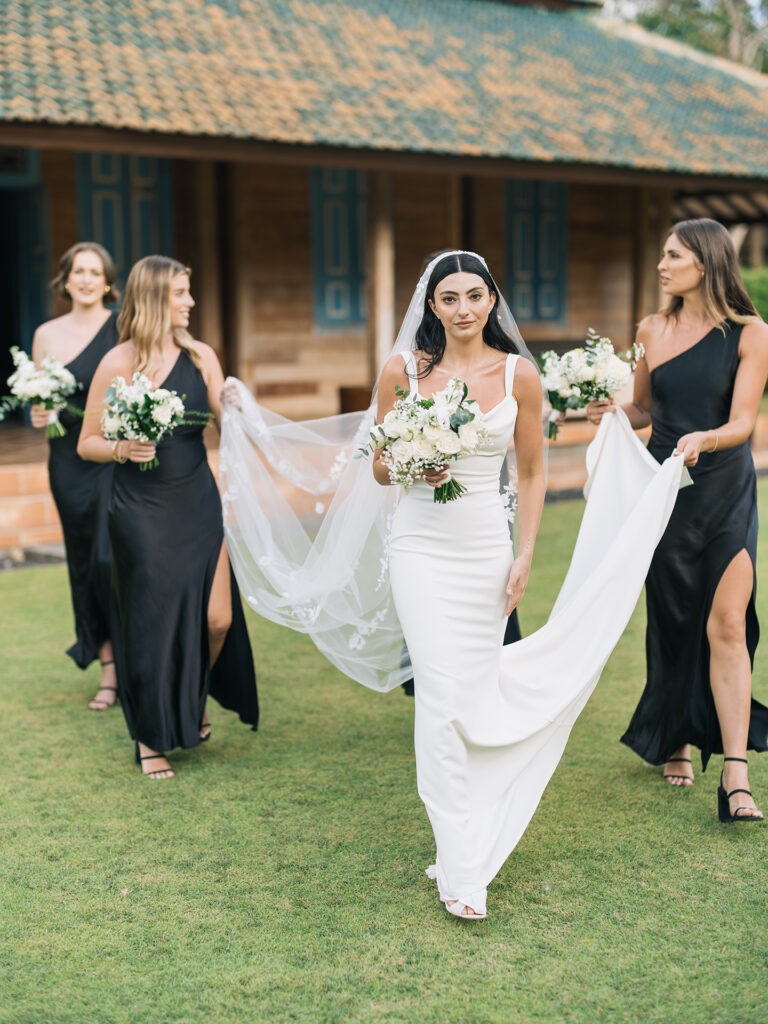
Some destinations market themselves as wedding destinations but lack the depth of experience to actually support the logistics. Bali is not one of those places.
After decades of hosting international couples — and Australian couples in particular — the wedding industry in Bali has matured into something genuinely impressive. There are experienced coordinators who’ve managed hundreds of destination weddings, vendor networks that communicate seamlessly, florists who understand bridal aesthetics across different cultures and tastes, and photographers who know every beach, temple, and clifftop at every hour of the day.
The legal side of things is worth mentioning too. Symbolic ceremonies — which most international couples in Bali opt for — are straightforward to arrange. You legally marry at home before or after the trip, and the ceremony in Bali is the celebration. No complicated foreign paperwork, no bureaucratic surprises. Many Australian couples find this actually simplifies the whole process.
The venues themselves are extraordinary in their variety. Uluwatu’s clifftop locations offer that dramatic Indian Ocean backdrop that’s become synonymous with Bali weddings. Ubud’s jungle and rice terraces offer something completely different — intimate, lush, wrapped in a kind of spiritual quiet that most venues anywhere in the world simply can’t replicate. Additionally, Nusa Dua provides a different experience with its polished resort infrastructure, beachfront access, and the kind of property-wide depth that lets an entire wedding day unfold without anyone needing to leave the grounds.
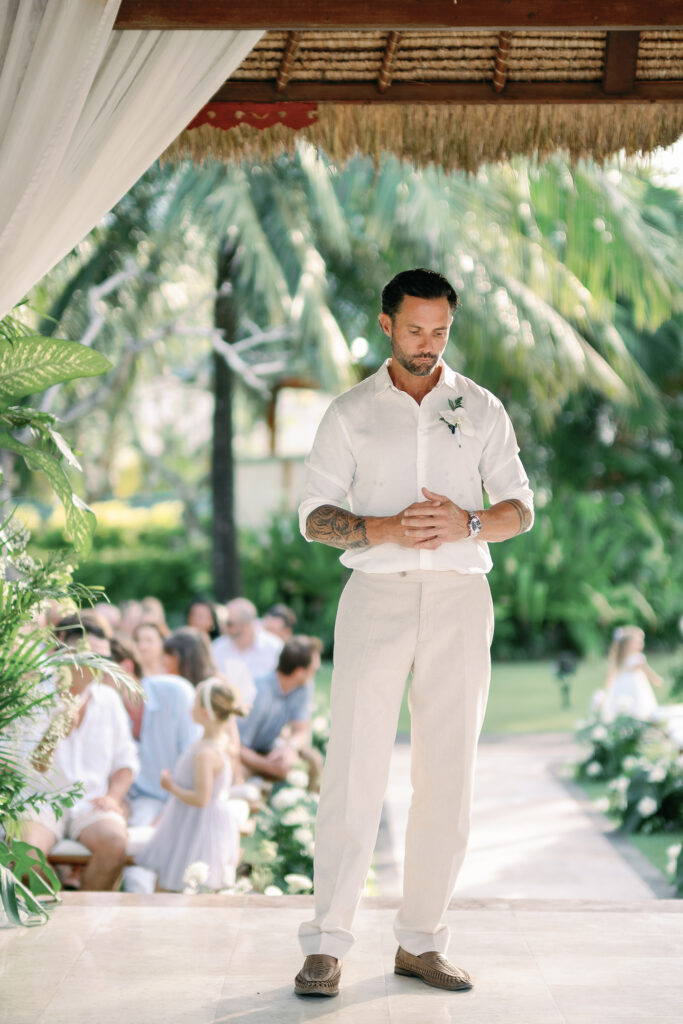
Tahlia and Blake chose Wonderland Uluwatu for their ceremony — you can see their full story in our Tahlia and Blake wedding gallery. Standing on that cliff edge with the ocean spread out below them, everything just worked — the light, the location, the feeling. Holly and Peter also married at Wonderland Uluwatu — see the Holly and Peter wedding gallery — and it was a completely different wedding. Same venue, entirely different atmosphere. That’s the mark of a venue with real depth.
Jaimee and David went a different direction entirely — their Nusa Dua Beach Hotel wedding moved through a gazebo ceremony on the lawn, cocktails in the garden, and a reception under fairy lights on the beachfront — three distinct spaces, one property, one seamless day. The resort handled logistics in a way that made the whole event feel effortless for the couple and their guests.
The Dry Season Is Made for Weddings
One of the most practical reasons Australian couples choose Bali is the timing. Bali’s dry season runs roughly from May through October — which aligns almost perfectly with the Australian autumn and winter wedding window, when couples want to escape the cold at home.
During these months, Bali delivers consistently clear skies, low humidity, and that extraordinary golden light that makes wedding photography look almost effortless. You’re not gambling on weather. You’re not crossing your fingers that the clouds part for the ceremony. The dry season in Bali is genuinely reliable, and experienced vendors plan everything around it.
This is different from many other destination wedding locations where weather is a constant source of anxiety. In the Greek islands, you’re competing with tourist high season. In parts of Southeast Asia, the wet season timing is unpredictable. In Bali, if you book between May and October, you know what you’re getting.
For Australian couples planning from home — often twelve months or more in advance — this predictability is enormously reassuring. You can lock in your date with confidence, knowing the conditions will support the day you’ve been imagining.
Why Photography at an Australian Couples Bali Wedding Is Extraordinary
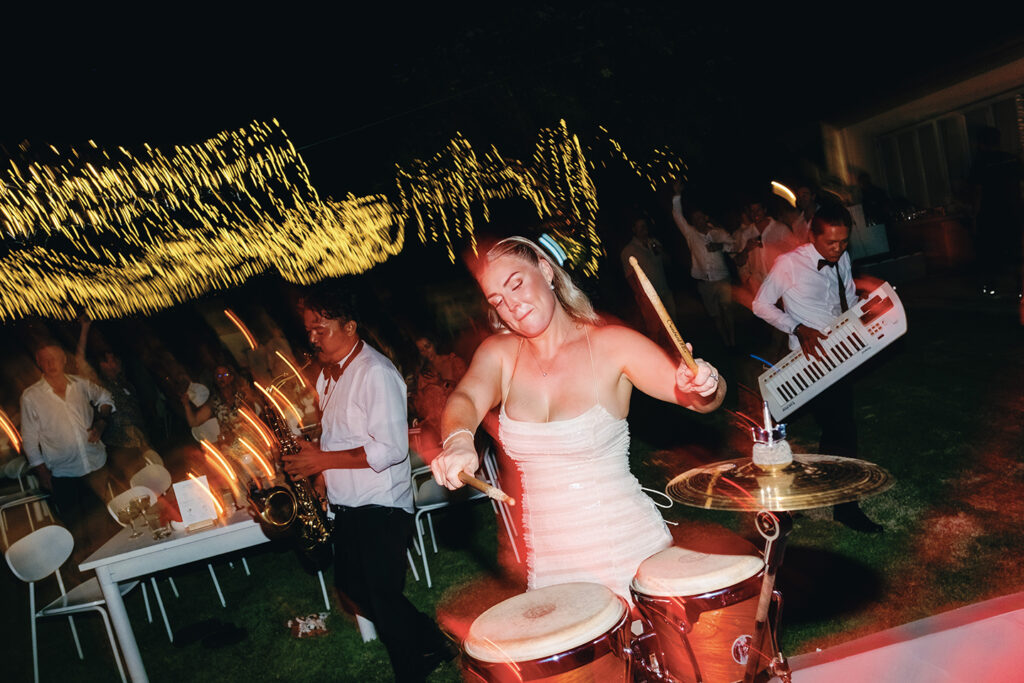
I’m a photographer, so perhaps I’m biased. But hear me out.
The landscape variety in Bali is difficult to overstate. In a single wedding day, you might shoot a ceremony at a clifftop temple, portraits in a rice terrace at golden hour, and reception coverage at a villa with an infinity pool overlooking the sea. The backdrops shift in ways that make every image feel completely distinct.
The light in Bali — particularly in the dry season from May through October — is extraordinary. Warm, directional, consistent. The kind of light photographers travel across the world to find, and here it shows up reliably for six months of the year. It falls at the perfect angle during golden hour, it diffuses beautifully through tropical canopies, and it bounces off the ocean in a way that makes everything glow.
For Australian couples who’ve seen the work coming out of Bali and wondered how it looks so consistently stunning, this is a big part of the answer. It’s not just good photographers. It’s the environment collaborating with you.
When I photographed Lauren and Dan’s ceremony, we had this moment just after the vows where the light broke through the treeline at exactly the right angle. Neither of us planned it. It just happened. That’s Bali doing what Bali does.
The variety of backdrops also means your wedding gallery tells a richer visual story than a single-location wedding can. Ceremony images feel completely different from portrait session images, which feel completely different from reception coverage. The day has visual chapters, and each one is distinct.
It Gives You Permission to Actually Celebrate

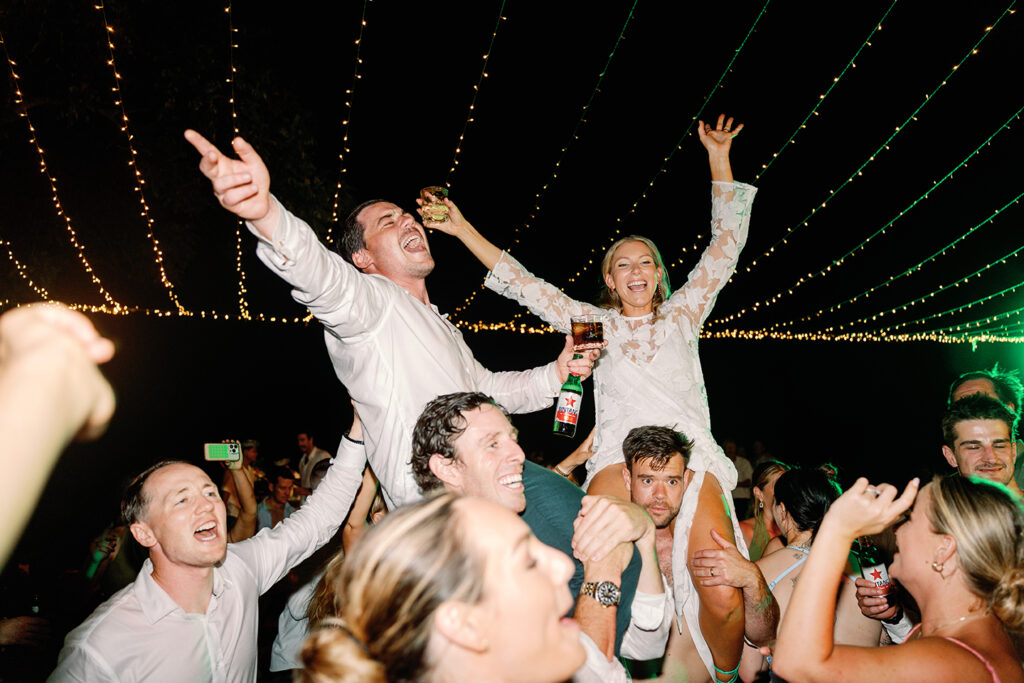
There’s something about leaving home that changes the energy of a wedding. The couple is fully present. The guests, having made the trip, are committed to the experience. Nobody’s slipping out early because they have work tomorrow. Nobody’s watching the clock.
Australian couples who’ve had their Bali wedding consistently tell me some version of the same thing: it felt like everyone fully arrived — not just physically, but emotionally. The wedding became a proper event — a few days of celebrating, not just a single afternoon squeezed between a church and a reception venue.
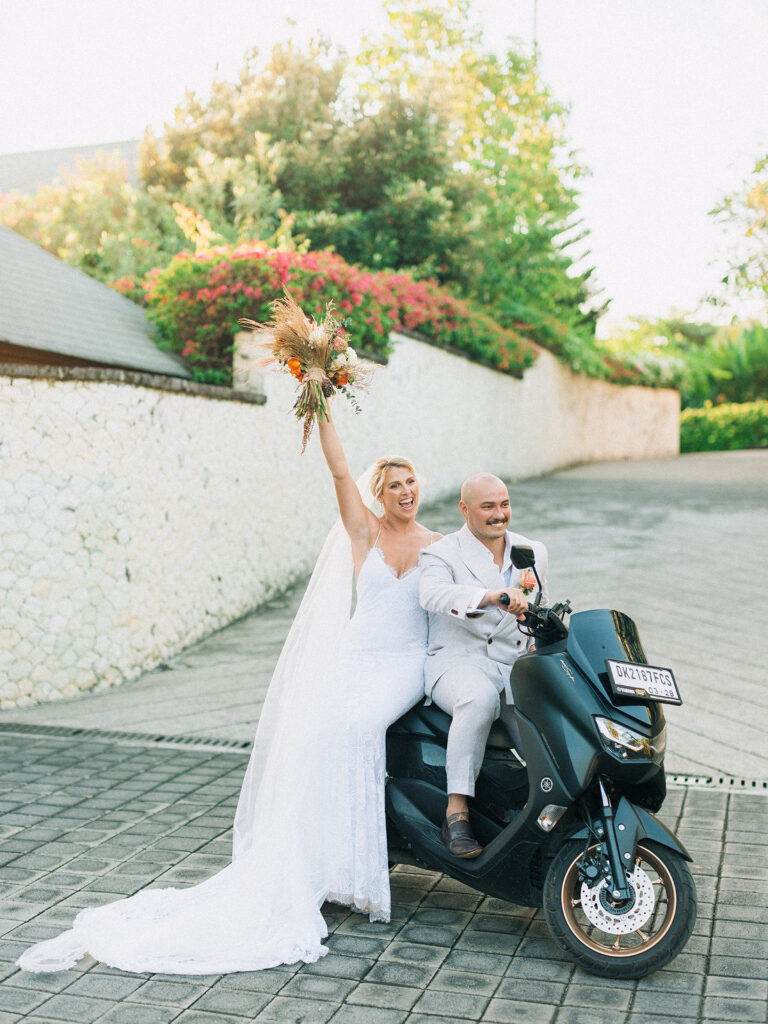
Furthermore, Bali has the infrastructure to support that. Pre-wedding dinners at incredible restaurants, morning-after brunches at villas overlooking the rice fields, day trips for guests who want to explore temples or catch a surf. The island becomes a kind of host for your entire celebration, extending the joy well beyond the wedding day itself.
There’s also something to be said for what happens when you remove people from their everyday environment. Office politics, family tensions, old grudges — they don’t always disappear, but they tend to soften when everyone’s somewhere beautiful and far from home. The mood lifts. People reconnect. The wedding becomes the thing it was always supposed to be.
There’s a Cultural Depth That Adds Meaning
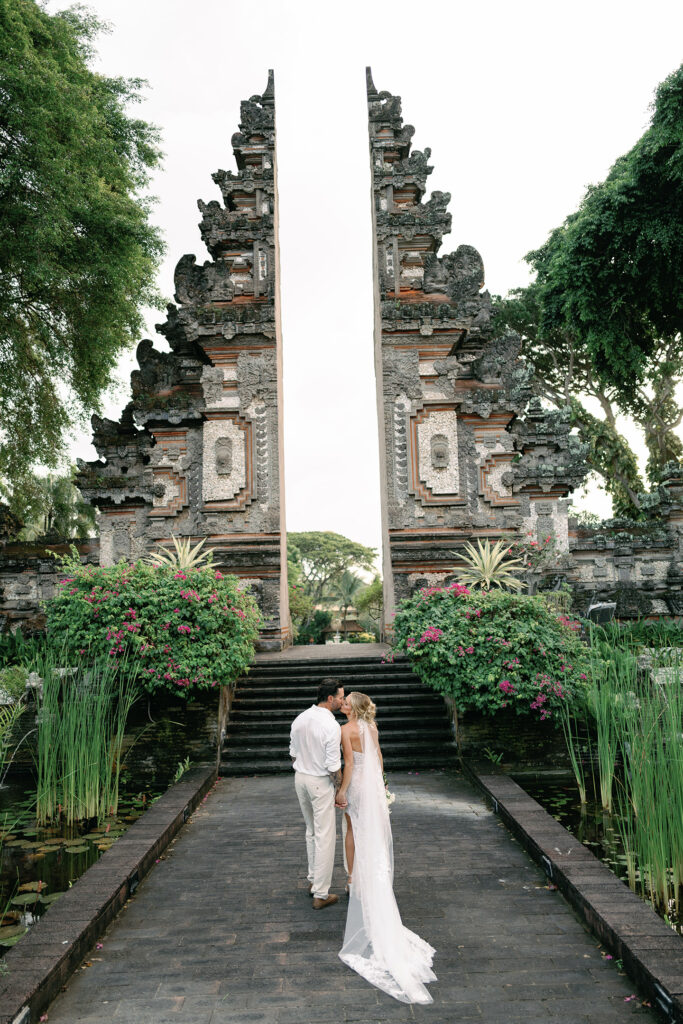
Bali isn’t just a backdrop. It’s a place with a living culture, a genuine spiritual tradition, and a relationship with ceremony that runs through everything here.
Even secular weddings in Bali carry a certain weight — a sense that this place takes ritual seriously, that the ground itself holds some significance. Couples who aren’t particularly religious still often feel it. There’s a reverence in the air that’s hard to articulate but consistently felt. The offerings at the temple gates. The sound of a gamelan in the distance. The way locals treat ceremony as something woven into daily life rather than set apart from it.
For some couples, this deepens the meaning of the day in ways they didn’t expect. They came for the aesthetics and the value. They left with something that felt closer to a genuine rite of passage — a sense that the place itself had witnessed and blessed what they were beginning together.
It’s not something you can manufacture. It’s simply what Bali is.
The Honest Answer: Why Australian Couples Choose a Bali Wedding
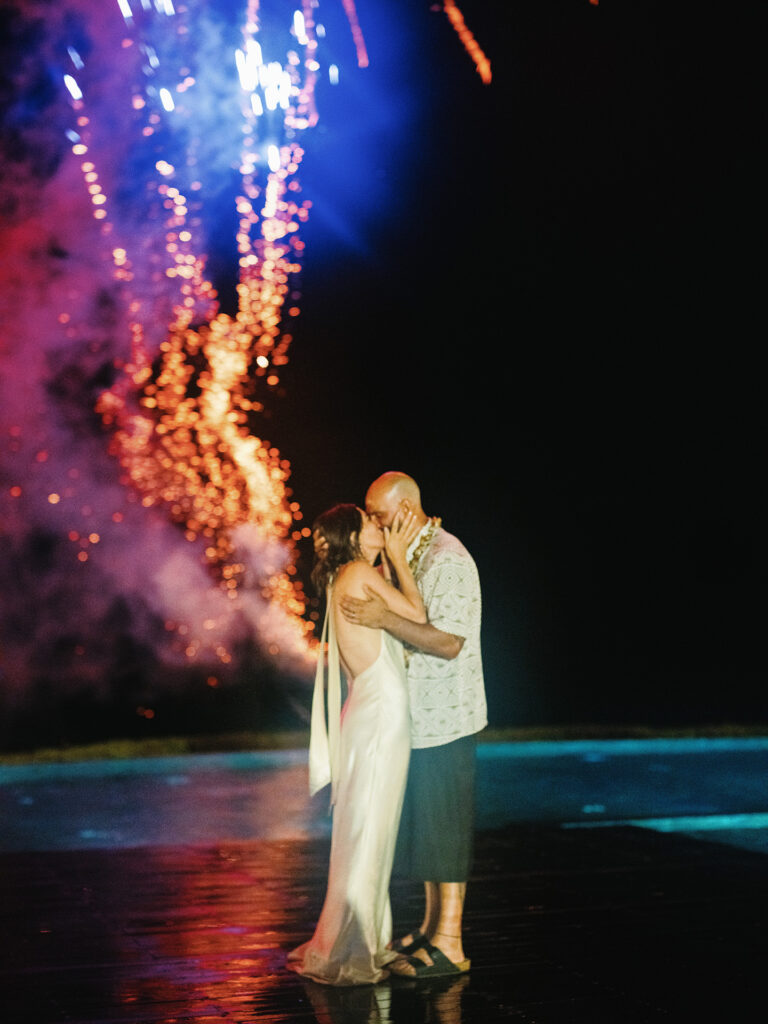
If I had to distil it into a single truth after everything I’ve seen over sixteen years of working in Bali: Australian couples choose Bali because it delivers on the promise that most wedding destinations only hint at.
It’s close enough to be practical and far enough to feel transformative. It’s affordable enough to say yes to the things you’d otherwise cut, and beautiful enough that you barely need to make it more beautiful. It has the vendors, the venues, the infrastructure, the weather, and — most importantly — the feeling.
The couples I photograph here aren’t settling for a destination wedding because they couldn’t afford something at home. They’re choosing Bali because it gives them something they couldn’t create anywhere else. A day that feels genuinely extraordinary. A celebration that their guests talk about for years. Photographs that look like nothing else in their social circle.
And that feeling? You can’t manufacture it. But in Bali, it tends to show up anyway.
If you’re an Australian couple exploring Bali as your wedding destination, I’d love to show you what’s possible. Take a look at our wedding photography services, or get in touch to start a conversation about your day.
What to Look for When Choosing Your Bali Wedding Team
One thing I’d add for any Australian couple still in the research phase: the quality of your vendor team matters enormously in a destination wedding context. At home, you can visit venues in person, meet photographers for coffee, taste the catering before you commit. In Bali, much of that happens remotely.
This makes reputation and communication style critically important. Look for vendors who respond promptly, who ask thoughtful questions about what you’re imagining, and who have a clear portfolio of work with international couples. Bali has hundreds of wedding photographers — but the ones who understand Australian couples, who know how to read a room and capture genuine emotion rather than staged poses, are a smaller group.
The same applies to coordinators. A good Bali wedding coordinator isn’t just a logistics person. They’re your translator — between cultures, between vendors, between what you’re imagining and what’s actually possible on the ground. The best ones have relationships built over years with venues and vendors, and they’ll advocate for you in ways you can’t do from a distance.
Ask for references from other Australian couples. Read the real wedding stories on photographer websites — not just to see the images, but to understand how the day unfolded. The story behind the photographs often tells you more about a vendor than the photographs themselves.
When I work with Australian couples, I always make time before the wedding to understand not just the logistics but the feeling they’re after. What matters most to them on the day. What they’re nervous about. What they hope their photos will look like in twenty years. That conversation shapes everything — and it’s the kind of attention that makes the difference between a wedding that goes well and a wedding that genuinely moves you.


