

Planning a wedding from another country sounds complicated. And honestly, if you go into it without the right information, it can be. But here’s what most planning guides won’t tell you: Bali is one of the most well-set-up destinations in the world for exactly this kind of wedding. The infrastructure exists, the vendors know what they’re doing, and thousands of Australian couples have done this before you. If you’re ready to plan your destination wedding in Bali from Australia, this guide covers everything you need to know.
I’ve been photographing weddings in Bali since 2010, and I’ve watched couples navigate this process from every angle — the ones who planned brilliantly and arrived relaxed, and the ones who scrambled because they didn’t know what they didn’t know. This guide is everything I wish someone had handed those second couples before they started.
If you’ve already decided Bali is the right place for your wedding, you might want to read about why so many Australian couples make that same choice. If you’re here because you’re ready to actually plan it, let’s get into it.
Start Planning Your Destination Wedding in Bali from Australia Earlier Than You Think
The single most consistent mistake I see when couples plan a destination wedding in Bali from Australia is underestimating how far in advance venue bookings close. This isn’t Sydney, where a venue might have availability in four months. The best venues in Uluwatu, Seminyak, and Ubud book out twelve to eighteen months ahead — sometimes more for peak season dates.
Bali’s dry season runs from May through October. That’s the window most Australian couples want because the weather is reliable, the light is extraordinary, and outdoor ceremonies carry almost no rain risk. Because everyone wants the same window, however, those months fill fastest.
As a general rule: if you want a dry season wedding at a venue you actually love, start planning eighteen months out. If you have flexibility on timing or venue, you can work with twelve. Less than that, and you’re planning around what’s left rather than what you want.
What “Starting Early” Actually Means
Starting early doesn’t mean making decisions early — it means securing the things that everything else depends on. In order, those are:
Your venue. Once the venue is locked, your date is locked, and everything else — vendors, flights, accommodation — can be organised around it.
Your photographer. Good Bali wedding photographers — the ones whose work actually made you fall in love with the idea of a Bali wedding — book out just as fast as the top venues. Don’t assume you can secure the venue first and sort photography later.
Your wedding coordinator. More on this shortly, but the coordinator shapes the entire planning experience. Get them involved early.
You Need a Local Coordinator — Full Stop
I say this without any reservation: attempting to plan a destination wedding in Bali from Australia without a local coordinator is one of the most stressful things a couple can do to themselves. I’ve seen it happen. It rarely ends well.
A good Bali wedding coordinator isn’t just someone who sends emails on your behalf. They have existing relationships with every vendor on the island. Additionally, they know which florists deliver what they promise and which ones don’t. They know how venue pricing actually works, which contracts have hidden costs, and how to navigate the logistics of a full wedding day in a country where things operate differently than they do at home.
They also handle the things you can’t easily manage from Australia — site visits, vendor meetings, tastings, setup walkthroughs. When something goes sideways on the day itself (and something always does, at every wedding, everywhere), they’re the ones who fix it before you ever know it happened.
Budget for a coordinator from the beginning. Their fee is almost always recovered in the vendor relationships and negotiating power they bring to the table.
How to Work Effectively With Your Coordinator From Australia
Once you’ve hired a coordinator, the working relationship becomes the backbone of your entire planning process. Most of it happens remotely — and how you manage that communication makes a significant difference to the experience.
Set up a single channel for all planning communication. Email works well because it creates a paper trail and allows for thoughtful responses. Avoid splitting conversations across WhatsApp, email, and Instagram DMs simultaneously — things get missed and it creates unnecessary confusion for everyone.
Schedule regular check-in calls rather than reaching out reactively every time a question comes up. Once a month in the early stages, moving to fortnightly or weekly in the final two to three months, is a rhythm that works well for most couples. Your coordinator can brief you on everything at once, and you can batch your questions rather than interrupting each other’s days constantly.
Be decisive when your coordinator needs answers. The vendors they’re managing work across multiple weddings simultaneously. When your coordinator asks for a decision on florals, catering, or run-of-day timing, a prompt response keeps your wedding moving up the priority list.
Finally, trust your coordinator’s local knowledge — especially when it conflicts with something you’ve read online. General wedding planning advice written for Australian or American markets doesn’t always translate to Bali. Your coordinator knows how things work on the ground, and that’s precisely what you’re paying for.
Book Flights and Accommodation as a Group Early
Many Australian couples underestimate how much smoother the guest experience becomes when accommodation is organised centrally — or at least centrally recommended — rather than left to each guest individually.
Talk to your coordinator about whether a villa block booking makes sense for your group size. A cluster of connected villas creates a shared base camp energy that’s difficult to replicate when guests are scattered across different areas of the island. It also simplifies transport logistics significantly on the wedding day itself.
For flights, the earlier guests are informed of the date and destination, the more options they have for affordable fares. Giving guests six to twelve months’ notice on a destination wedding is considered good practice — it allows them to save, to plan their leave from work, and to secure flights before prices climb.
Direct flights from Sydney, Melbourne, Brisbane, and Perth to Bali are available through multiple carriers, which gives your guests genuine options at different price points. Bali is accessible enough that last-minute guests can sometimes find reasonable fares, but the guests who plan earliest will always have the best experience getting there.
Understand the Legal Side Before You Commit

This is the part most couples find least exciting and most important. If you want your Bali wedding to be legally recognised in Australia, there are specific steps that must be followed — and they involve paperwork that takes time.
Australian citizens marrying abroad need to comply with both Australian and Indonesian legal requirements. Under Indonesian law, a civil marriage for foreign nationals involves specific documentation requirements including a Certificate of No Impediment to Marriage (CNI), which the Australian Government issues and you must obtain before you travel.
The process is manageable, but it’s not something to leave to the last minute. The Australian Government’s Smartraveller website has current, accurate information on marrying abroad as an Australian citizen, and I’d recommend reading it early in your planning process rather than after you’ve signed a venue contract.
Many couples choose to complete the legal registration in Australia before or after the Bali ceremony, keeping the Bali event as the celebration itself. This is extremely common and completely valid — your Bali ceremony can be every bit as meaningful and official-feeling without being the legal point of registration.
A Note on Symbolic Ceremonies
A symbolic ceremony in Bali — one that is beautiful, personal, and legally non-binding — is genuinely what the majority of international couples do. The ceremony is conducted by a celebrant, your vows are real, your guests are there, and your photos are indistinguishable from a legally registered wedding. The legal paperwork simply happens separately, either before you leave Australia or after you return.
Your coordinator will walk you through the options and help you decide what suits your situation.
Build Your Vendor Team Carefully
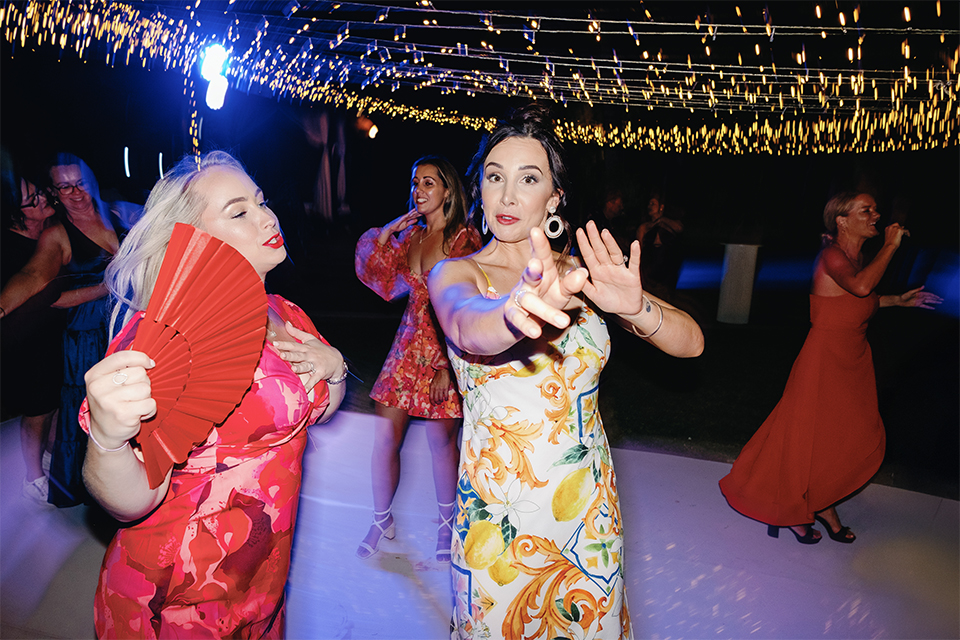
Beyond the venue, coordinator, and photographer, your vendor team will include a celebrant, florist, hair and makeup artist, caterer (if not included in the venue), and usually a videographer. In Bali, most of these vendors work as part of established networks — your coordinator will have recommendations, and those recommendations are worth taking seriously.
That said, do your own research too. Look at portfolios. Read reviews. Ask your coordinator specifically why they recommend each vendor they suggest. A great coordinator will welcome that conversation.
Florists
Bali has exceptional florists who work at a fraction of what the same florals would cost in Australia. Be specific about your vision — bring reference images, describe the feeling you want, and don’t assume a florist will interpret a vague brief the way you’d hope. For example, the best florals in Bali come from clear direction and a good relationship with your coordinator.
Celebrants
Your celebrant shapes the ceremony more than almost any other vendor. Meet them, or at minimum video call them, before you commit. You want someone who listens, who can write vows that sound like you, and who performs well in front of a crowd. Ask to see or hear examples of previous ceremonies they’ve led.
Hair and Makeup
Trial runs are worth doing if you’re travelling to Bali for a pre-wedding visit. If that’s not possible, be extremely specific about your reference images and ask your artist for photos of recent work on similar skin tones and hair types to yours.
Plan Your Guest Experience, Not Just Your Wedding Day
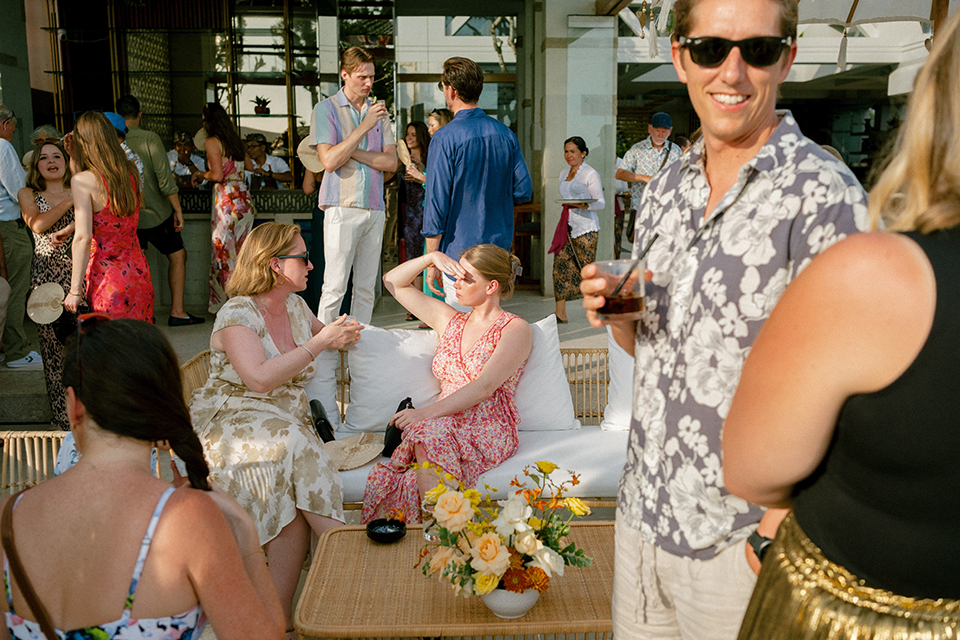
One of the real advantages when you plan a destination wedding in Bali from Australia is that it becomes a multi-day experience for everyone involved — not just a single afternoon. Lean into this.
Think about where your guests will stay, and whether proximity to each other matters to you. A block of villas or rooms at a single property creates a very different energy than guests spread across different parts of the island. Many couples arrange a welcome dinner the night before and a recovery brunch the morning after — both of which are easy to organise in Bali and add enormously to the overall experience.
Give your guests enough information before they arrive. A simple wedding website or information document with accommodation recommendations, transport options, and a loose itinerary goes a long way. Guests who feel looked after from the moment they book their flights arrive in better spirits and are easier to manage on the day.
Get Your Timing Right Within the Day
The Bali sun is not forgiving in the middle of the day. Outdoor ceremonies scheduled for noon are uncomfortable for guests and produce harsh, unflattering light for photography. However, the best ceremonies happen in the late afternoon — typically 4pm to 5:30pm — when the temperature drops, the light turns golden, and everything looks exactly like the Bali wedding photos that made you want to do this in the first place.
Work with your venue and coordinator to structure the day accordingly. If your venue has a strict start time that puts your ceremony in the middle of the day, factor that into your decision about whether the venue is right for you.
Budget Honestly and Plan for the Extras

When you plan a destination wedding in Bali from Australia, the value compared to equivalent events at home is remarkable, but that value can erode quickly if you don’t budget carefully for the things that aren’t immediately obvious.
The costs that catch couples off guard most often include: international money transfers and exchange rate fluctuations, guest transport between locations on the island, gratuities for the venue and vendor teams, and the cost of a pre-wedding site visit trip if you choose to make one.
None of these are dealbreakers. However, factoring them in from the beginning means you won’t feel like costs are spiralling in the final months before the wedding.
For a realistic sense of what a well-produced Bali wedding actually costs at different budget levels, your coordinator is the best resource — they work with real numbers every day and can tell you quickly what’s achievable within your budget and what isn’t.
Plan Your Destination Wedding in Bali from Australia: What to Expect
Once your key vendors are booked, the planning process for a Bali wedding from Australia is largely conducted remotely — emails, video calls, shared documents, and planning platforms your coordinator provides. Most couples find that once the initial flurry of bookings is complete, the process settles into a rhythm that’s entirely manageable alongside normal life.
The final months before the wedding tend to pick up again as details are confirmed — final guest numbers, seating, catering selections, day-of timelines. Your coordinator leads this process and prompts you for the information they need. Your job is to respond promptly and trust the people you’ve hired.
The weddings that run most smoothly aren’t the ones with the biggest budgets or the most elaborate details. They’re the ones where the couple hired good people, communicated clearly, and then let those people do their jobs.
It also helps to arrive in Bali a day or two before the wedding rather than flying in the night before. The time difference between Australia and Bali is small — just two to three hours depending on your state — but travel fatigue is real, and the last thing you want is to feel rushed or off-balance on the morning of your wedding. Give yourself time to settle in, reconnect with your partner, and let the island do what it does best: slow everything down to the pace it was always supposed to be at. Couples who arrive early consistently tell me the same thing — by the time the wedding day comes, they feel genuinely ready for it rather than still catching their breath from the journey.
For a sense of what the day itself actually feels like once all the planning is done, Jaimee and David’s Nusa Dua Beach Hotel wedding is a great example — a full day that moved beautifully across multiple spaces, with a team that made it look effortless. Lauren and Dan’s wedding is another — they planned from Melbourne, communicated remotely for over a year, and arrived in Bali to find everything exactly as they’d imagined it. That outcome doesn’t happen by accident. It happens because the right people were in place, the timeline was realistic, and the couple trusted the process they’d set in motion.
You can also explore our Bali elopement wedding guide if you’re considering a smaller, more intimate approach, or take a look at Uluwatu wedding venues in Bali to start thinking about locations.
When you’re ready to talk through your specific plans, get in touch with us here. We’re based in Bali, we’ve been doing this for a long time, and we’d love to be part of your day.


