

Sunset Couple Session Uluwatu Bali: What Nobody Tells You Before You Book
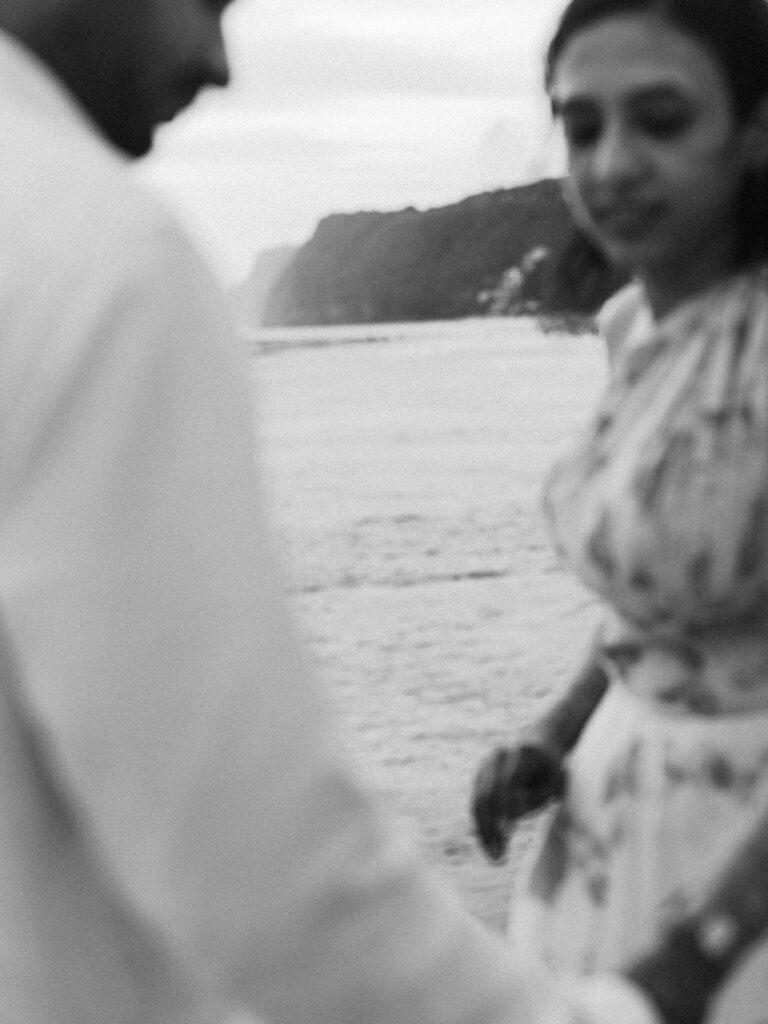
A sunset couple session Uluwatu Bali is one of those things that looks straightforward from the outside.
You find a photographer. You show up at the cliffs. The sun goes down. You get beautiful photos.
Except it almost never works like that.
Uluwatu at sunset is one of the most photographed locations in Bali — and one of the most unforgiving. The window is narrow. The crowds are real. The light moves fast. And the difference between photos that look like everyone else’s Uluwatu shots and photos that actually feel like yours comes down to decisions made well before the session starts.
This is the part nobody talks about in the booking process. And it’s the part that determines everything.
Why a Sunset Couple Session Uluwatu Bali Is Different From Everywhere Else
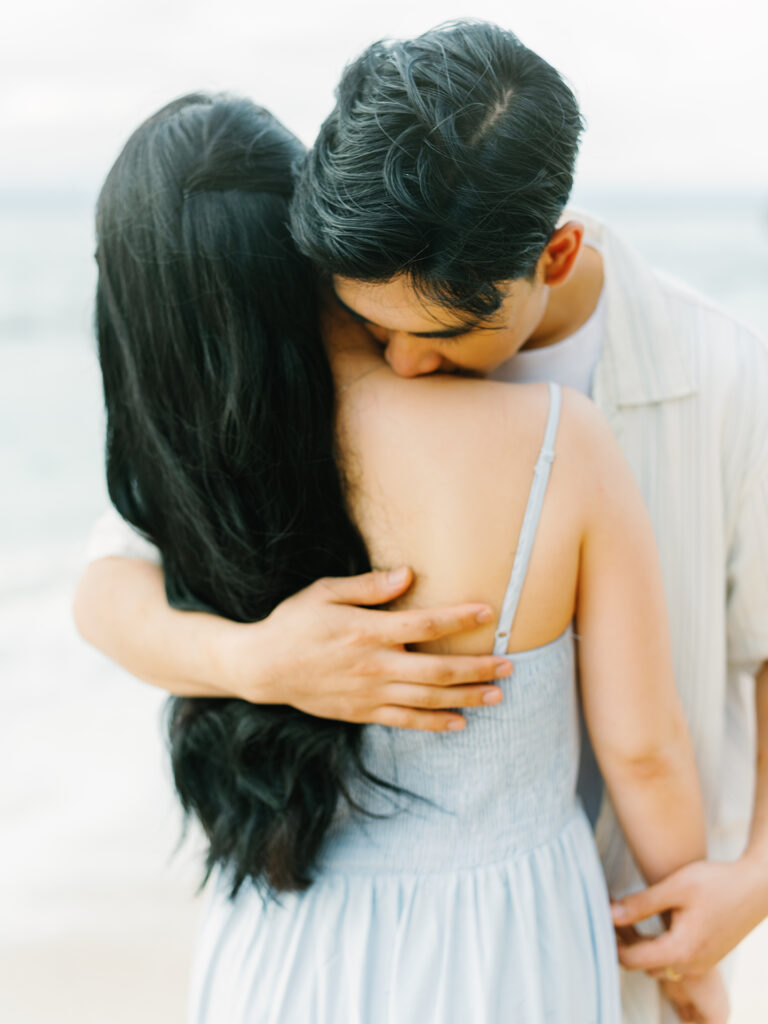
Most locations in Bali are forgiving. You show up, the environment does most of the work, the light is beautiful, and if you have a decent photographer you’ll walk away with something good.
Uluwatu doesn’t work like that.
The Bukit Peninsula is dramatic by design — sheer limestone cliffs dropping into the Indian Ocean, a horizon that goes on forever, light at golden hour that turns everything warm and cinematic. It’s the most visually striking part of Bali, and there’s a reason couples from all over the world specifically request it.
But dramatic environments are also demanding ones.
The angle of the light changes every few minutes during the golden hour window. The clifftops that look incredible in photos are often crowded with tourists, motorbikes, and vendors. The spots that photograph well — the ones without other people in the background, with clean sightlines to the ocean — require knowing exactly where to go and when.
A sunset couple session Uluwatu Bali that works is one where all of that has been figured out before you arrive. Not on the day, not in the moment — before.
The Golden Hour Window: Narrower Than You Think
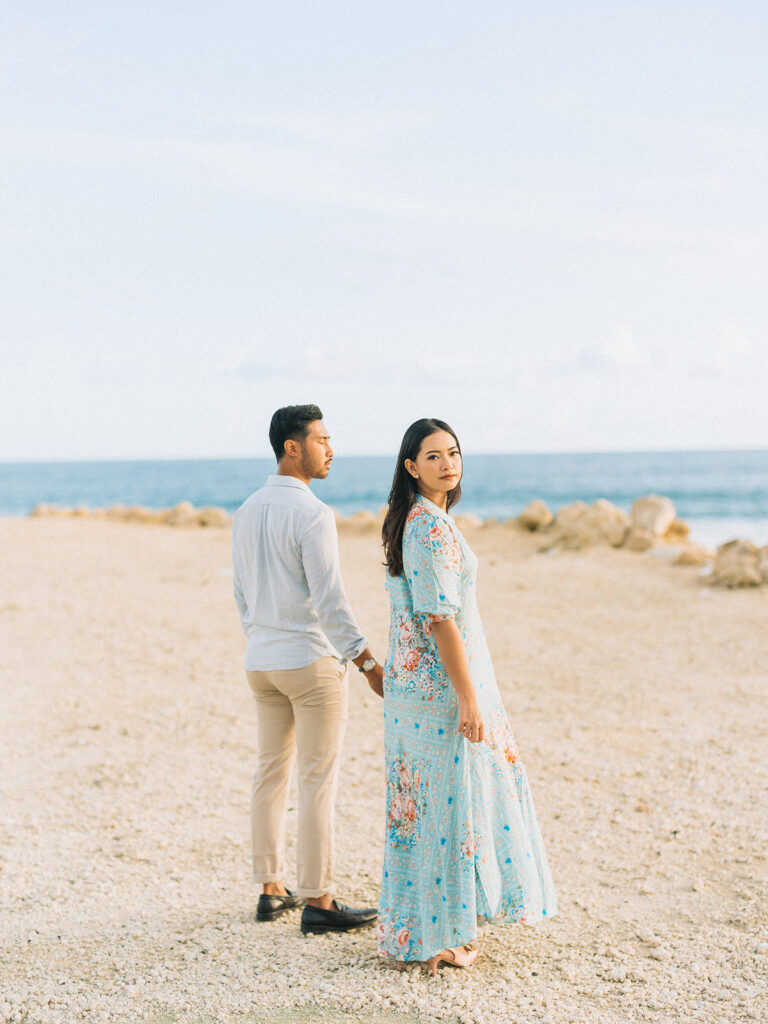
Here’s something most couples don’t realise until they’re standing at Uluwatu watching the sun disappear:
The window for the best light at Uluwatu is approximately forty-five minutes. Sometimes less.
It starts when the sun drops low enough to lose its harshness — usually around an hour before actual sunset — and it ends when the light disappears entirely. Within that window, there are maybe twenty minutes of genuinely extraordinary light. The kind that makes photos look like they were shot on another planet.
Planning a sunset couple session Uluwatu Bali means planning around that window specifically. Not arriving at the official sunset time — arriving early enough to be in position before the light is already at its peak.
This also means knowing exactly which spots catch the light at which times. The clifftops at Uluwatu face different directions. Some locations are perfect at 5:30pm. Others don’t come alive until 6:15pm. Getting this wrong by thirty minutes means entirely different photos.
For a broader look at how timing works across different Bali locations: Bali Couple Photoshoot — Best Time and Locations.
The Crowd Problem — and How to Work Around It
Uluwatu Temple draws thousands of visitors every day, particularly at sunset. The clifftops around the temple are busy in ways that photographs don’t always convey.
This is the reality of shooting at one of the most popular viewpoints in Southeast Asia.
The solution isn’t to avoid Uluwatu — it’s to know where the crowds aren’t.
The Bukit Peninsula has a long clifftop stretch, and most of the tourists are concentrated in a relatively small area around the temple viewpoint. Outside that concentration, there are quieter sections that photograph just as beautifully — sometimes more so, because they’re not trampled and over-lit by tour groups.
Finding these spots requires shooting at Uluwatu regularly. Not visiting occasionally — regularly. The kind of local knowledge that comes from knowing which access points work at which times, which sections are clear on weekdays versus weekends, which spots have changed in the last few months.
This is exactly the kind of knowledge that separates a photographer who shoots at Uluwatu from one who works there.
Real weddings like Lauren & Dan’s at Pandawa Cliff Uluwatu show what’s possible when the location is genuinely known rather than just visited.
The Specific Locations That Work
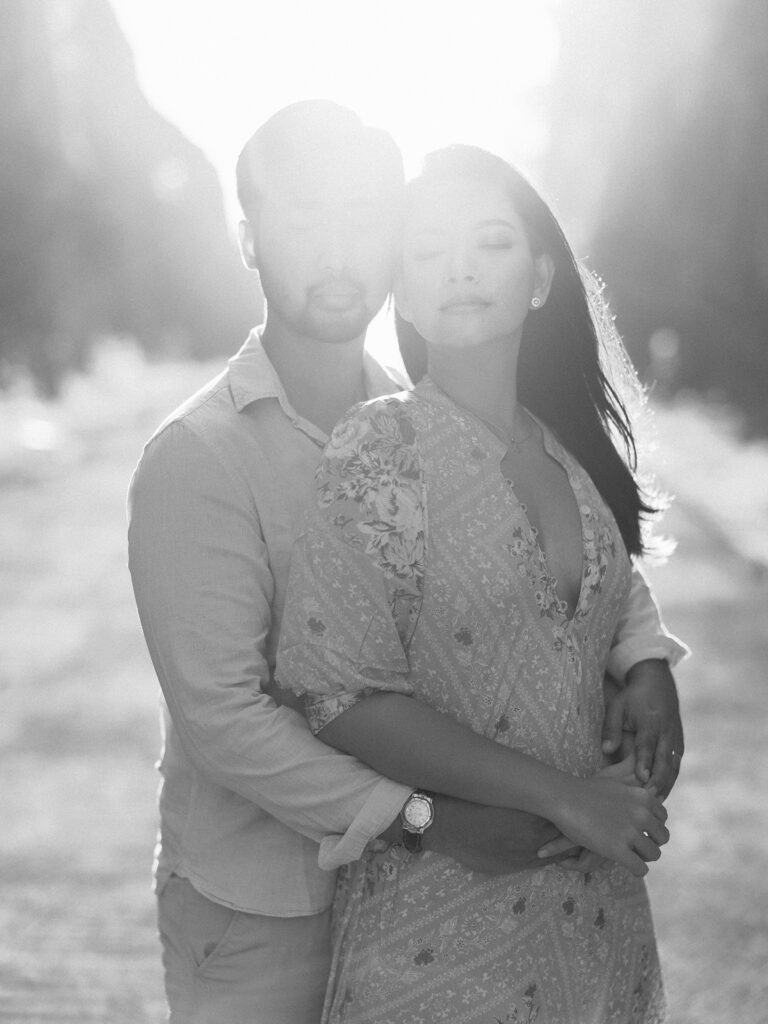
Without giving away every spot — some things are better experienced than read about — here’s a general map of what Uluwatu offers for a sunset couple session.
The Main Clifftops
The most iconic views. The Indian Ocean stretching to the horizon, warm light hitting the limestone, the kind of backdrop that looks genuinely extraordinary in photos.
Also the busiest. Best approached with a clear plan for positioning — knowing which angles exclude the crowds, which sections are currently accessible, and how to move quickly between spots as the light changes.
The Lower Rock Formations
Less visited, more dramatic in a different way. The layered limestone formations at lower cliff sections create texture and foreground interest that the pure clifftop shots don’t have.
These spots require more physical navigation — you’re moving over uneven terrain rather than standing on a viewing platform — but the results are worth it. The sense of scale is different here. The ocean feels closer.
The Surrounding Beaches
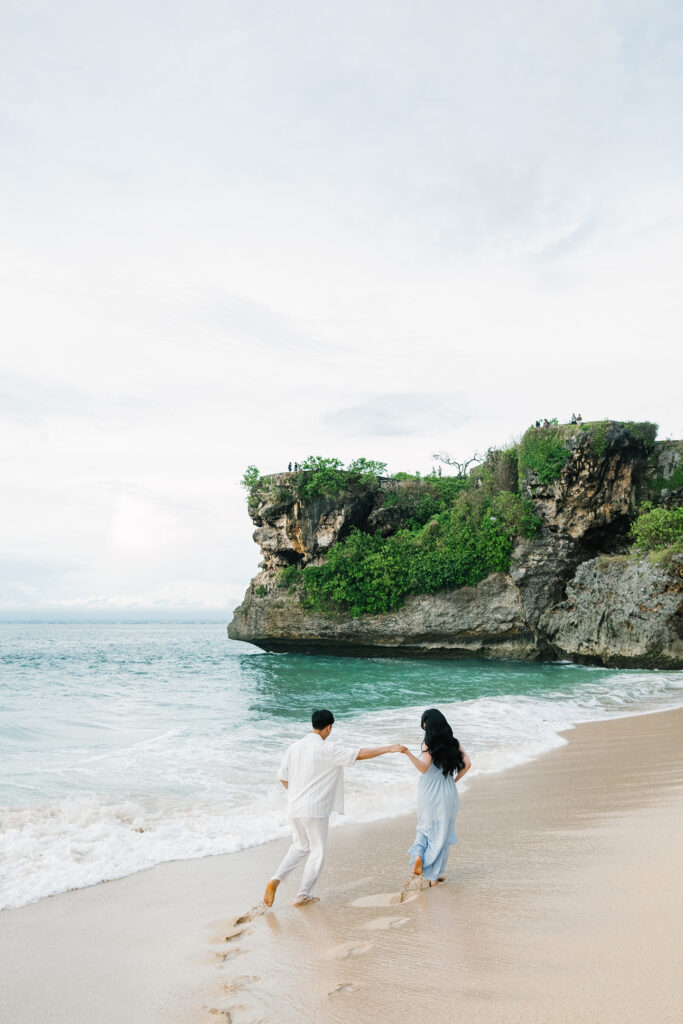
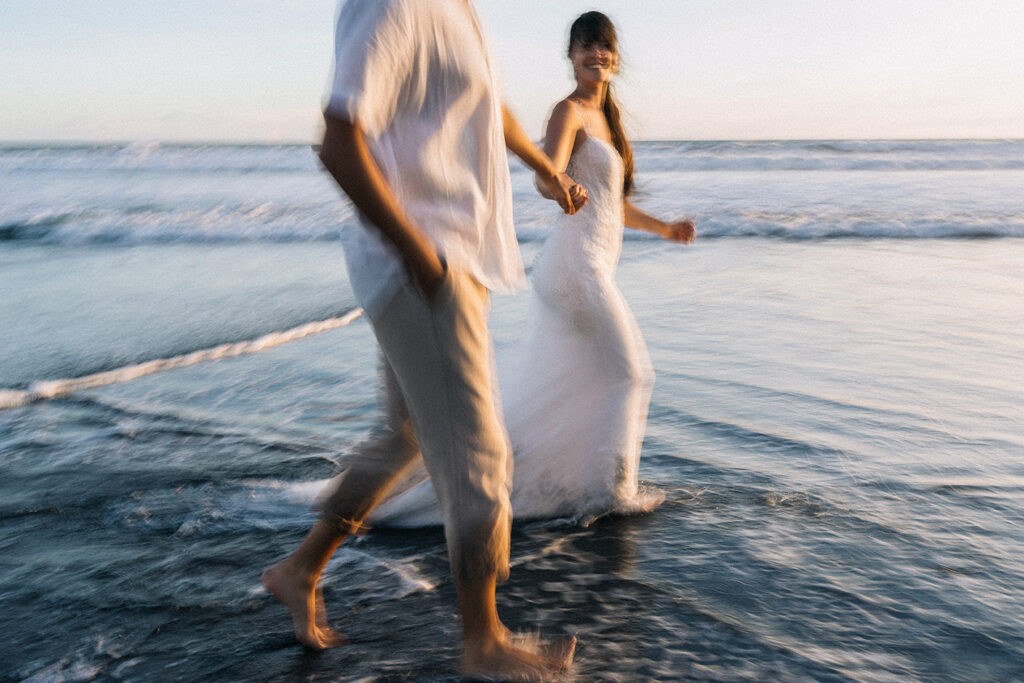
Bali’s southern beaches sit below the Uluwatu cliffs — accessible from the clifftops and completely different in character. Black sand, incoming surf, the cliffs visible in the background.
This is where the sunset couple session Uluwatu Bali can shift from cinematic to intimate. The beach light at golden hour is softer than the clifftop light. Couples who want the full range — dramatic cliffs plus quieter beach moments — can cover both in a single session if the timing is planned correctly. This kind of multi-environment approach is something worth discussing before the session: Pre-Wedding Photoshoot Bali.
What to Expect on the Day
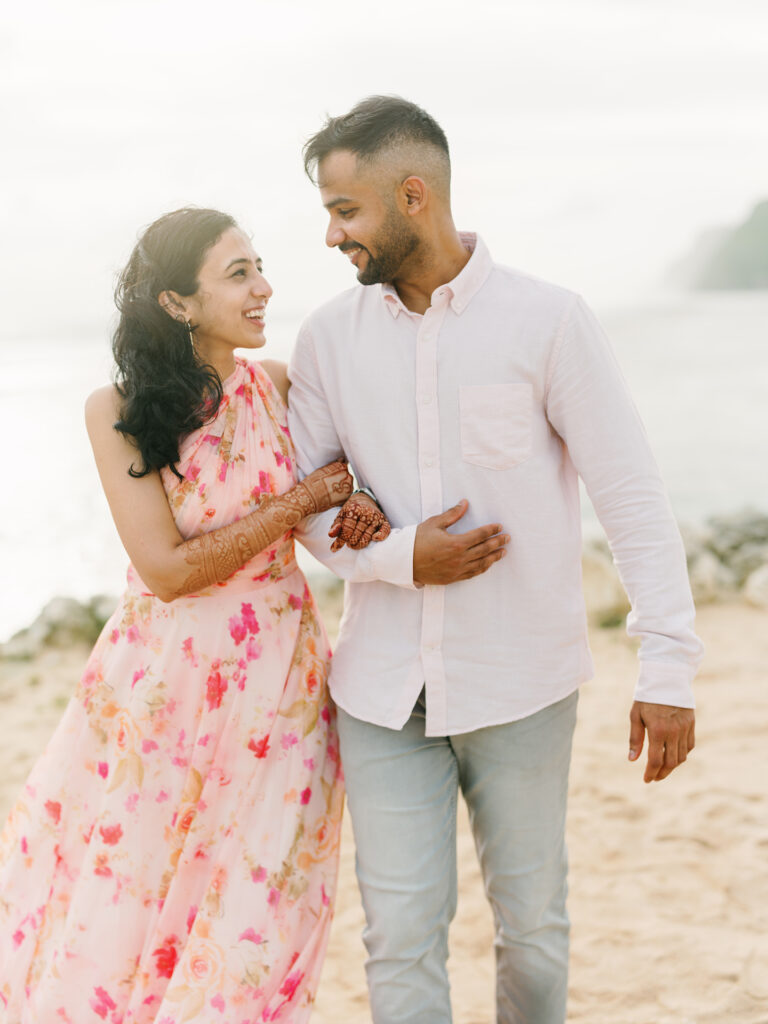
A well-planned sunset couple session Uluwatu Bali typically runs two to three hours, starting before the golden hour window opens.
Arrival and positioning — getting to the right spots before the light peaks. This is not the time to be figuring out where to go.
The golden hour window — the core of the session. Moving between locations as the light changes, working quickly but without rushing. The best frames from any Uluwatu session come from this window.
The final light — the twenty minutes after the sun drops below the horizon. The sky often does extraordinary things in this period. Deep blues, remnant pinks, a quality of light that’s different from golden hour but equally beautiful.
The blue hour extension — for couples who want a different look entirely. The cliffs at dusk, with the sky still holding colour, produce photos that look nothing like the golden hour shots. Completely different mood.
Not every session covers all of these phases. It depends on what you’re after. But knowing they exist — and planning for them — is the difference between a session that captures one version of Uluwatu and one that captures several.
How the Direction Works at Uluwatu
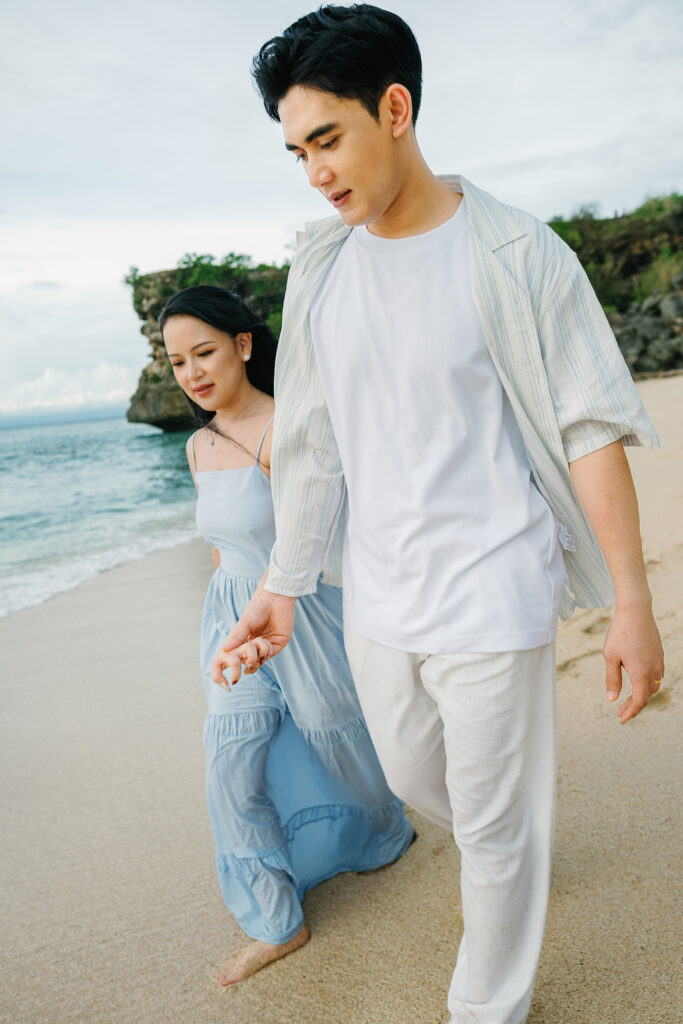
Most couples arrive at a sunset couple session Uluwatu Bali not knowing what to do with themselves in front of a camera. This is completely normal and it’s worth being direct about it.
The direction at Uluwatu is different from direction at a beach or in a rice field. The environment is more dramatic, which means the temptation to pose for it is stronger. Couples who have never been photographed before sometimes arrive at the cliffs and immediately start performing — standing in ways that look stiff and deliberate rather than natural.
The direction I use at Uluwatu is mostly about movement and attention rather than positioning. Walk here. Look at that. Do something — anything — and let me find the frame. The dramatic backdrop does its work when the people in front of it are actually present with each other rather than performing for the camera.
This approach — the documentary instinct even in a dramatic environment — is something I’ve written about in more depth here: Documentary Wedding Photographer Bali Experience.
Practical Information for Planning Your Session
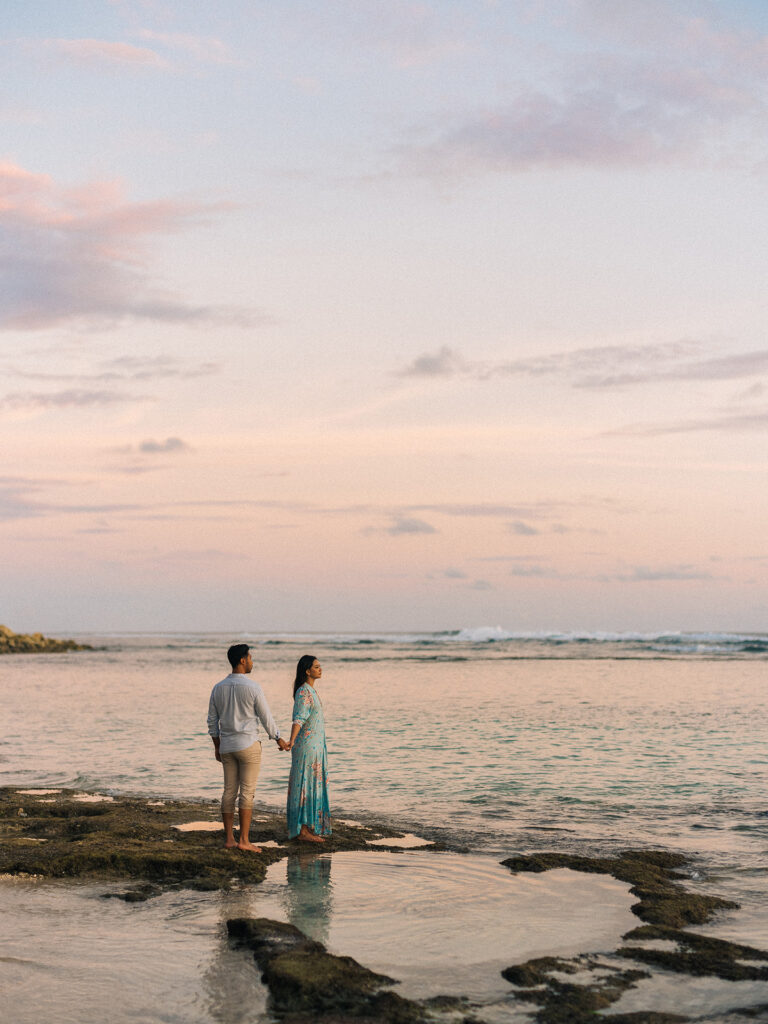
When to Arrive
At least ninety minutes before sunset. This gives time to park, navigate to the location, and be in position before the light starts doing interesting things. Arriving at sunset time means arriving late.
What to Wear
Uluwatu’s clifftop wind is real. Whatever you wear should be able to handle movement — flowing fabrics look extraordinary in the wind but need to be worn with comfort, not fought against. Lighter layers work better than heavy fabrics.
Colour-wise: the warm tones of the Uluwatu landscape — the limestone, the golden light — are complemented by earthy colours. Cream, terracotta, warm white, sage. Avoid cold blues and greys which tend to fight the warmth of the environment.
Getting There
Uluwatu is in the south of Bali, about an hour from central Seminyak depending on traffic. The road down to the temple area gets congested around sunset. Build in extra travel time, particularly if you’re coming from Ubud or the north.
A driver who knows the area — rather than relying on GPS — makes a meaningful difference to how smoothly the logistics work.
Session Length
Two hours is the minimum for a session that captures the full range of what Uluwatu offers. Three hours is better if you want to include beach time below the cliffs. For couples combining a sunset couple session Uluwatu Bali with another location earlier in the day, factor in travel time and energy — the clifftops require some physical navigation.
For a full breakdown of what to expect across different session lengths and what they cost: Bali Couple Photoshoot Cost 2026.
What Makes Uluwatu Sessions Fail
It’s worth being honest about this, because it happens.
Arriving too late. The golden hour window doesn’t wait. Couples who arrive at the official sunset time often find the best light is already gone.
Choosing the wrong spots. The most accessible viewpoints at Uluwatu are not always the best ones. Going where everyone else goes produces photos that look like everyone else’s.
Weather. Uluwatu faces west, which means cloud cover on the western horizon can block the sunset entirely. This is unpredictable and uncontrollable — but an experienced photographer has backup plans and knows how to work with overcast light rather than waiting for conditions that aren’t coming.
Crowd mismanagement. Not knowing how to position around the crowds produces photos with fifty strangers in the background. This is a framing and positioning skill, not luck.
Over-posing. The dramatic environment creates a temptation to match it with equally dramatic poses. The sessions that produce the most memorable photos are usually the ones where the couples weren’t trying to match the location — they were just in it.
Why Uluwatu Is Worth It

For all of its challenges, Uluwatu produces the kind of photos that are genuinely hard to achieve anywhere else.
The scale. The light. The way the Indian Ocean stretches out behind you with nothing between you and the horizon. There’s a quality to sunset couple session Uluwatu Bali photos that comes from being at the right cliff, at the right angle, at the right moment — and that combination is hard to replicate anywhere else in Bali.
That’s not something that can be replicated at a studio or manufactured in a village rice field. It exists at Uluwatu, at that specific time of day, when the conditions come together.
Getting those conditions right is the whole job.
If you’re considering a sunset session at Uluwatu and want to talk through what it would actually look like — timing, location, what to expect — get in touch. It’s worth having the conversation before you book anything.
For couples planning a full wedding at Uluwatu and considering a session as part of that: Uluwatu Wedding Venues Bali covers the venues and what each one offers in detail.
And if you’re still working out what to look for in a photographer for this kind of session: How to Choose a Wedding Photographer in Bali.


