

Indian Wedding Bali — Saloni & Rohit at Conrad Bali
Saloni and Rohit’s Indian wedding in Bali was more than a celebration — it was a multi-day story of culture, family, and real emotion, set against the oceanfront of Conrad Bali in Nusa Dua.
Some weddings are designed to impress. Others are felt long after they are over. This one was both — visually stunning in the way that only a luxury Indian wedding in Bali can be, and deeply personal in a way that cannot be staged or replicated.
There were grand moments — ceremonies rich with tradition, Sangeet nights filled with energy, a reception that stretched long into the evening. But what stayed with us were the quieter ones. The way Rohit looked at Saloni before the ceremony began. The laughter between families meeting not just as guests, but as one. The stillness right before everything started.
As a Bali wedding photographer, these are the moments we search for.
Why Conrad Bali Works for Indian Weddings
When planning a multi-day Indian wedding in Bali, the venue is not just an aesthetic decision — it is a logistical one.
Conrad Bali works for Indian weddings because it understands scale without sacrificing intimacy. The property is expansive enough to hold each ceremony in its own dedicated space, while still keeping everything connected — guests, family, and energy all moving naturally from one event to the next.
For Indian weddings specifically, this matters. Each ceremony carries a different register:
Mehendi is soft and unhurried, centered around the bride, filled with conversation and henna and the particular kind of warmth that comes from being surrounded by people who have known you for years. Haldi is rawer — more tactile, more emotional, less about appearance and more about what it means to cross a threshold. Sangeet is where everything opens up — music, performance, families releasing whatever they have been holding. And the ceremony itself is the quiet centre of it all.
At Conrad Bali, each of these moments has room to exist fully — beachfront spaces for the ritual moments, indoor ballrooms for the celebration that follows. The ocean always present in the background, never competing, always supporting.
Day One: The Energy Before Anything Begins
The first day did not begin with a ceremony. It began with people.
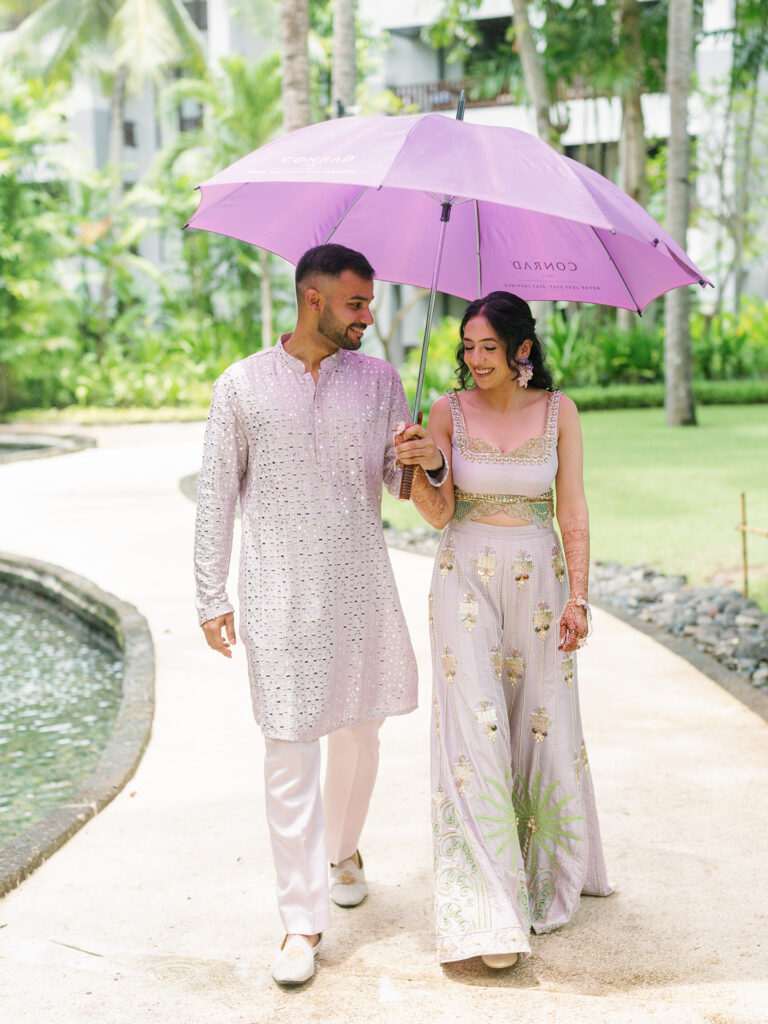
Guests arriving from the UK, from India, from Australia — the particular energy of a destination wedding where everyone has committed to being there, and that commitment changes how they show up.
Friends reconnecting after months or years. Families meeting for the first time. The specific warmth of a Bali arrival, when the heat and the light and the smell of the island settles over everything and the Indian wedding in Bali begins to feel real.
As photographers, this is where we start — not by directing, but by watching. The best images from any wedding rarely come from posed moments. They come from the spaces between them.
Mehendi: Patience and Softness
The Mehendi ceremony introduced a different tempo.
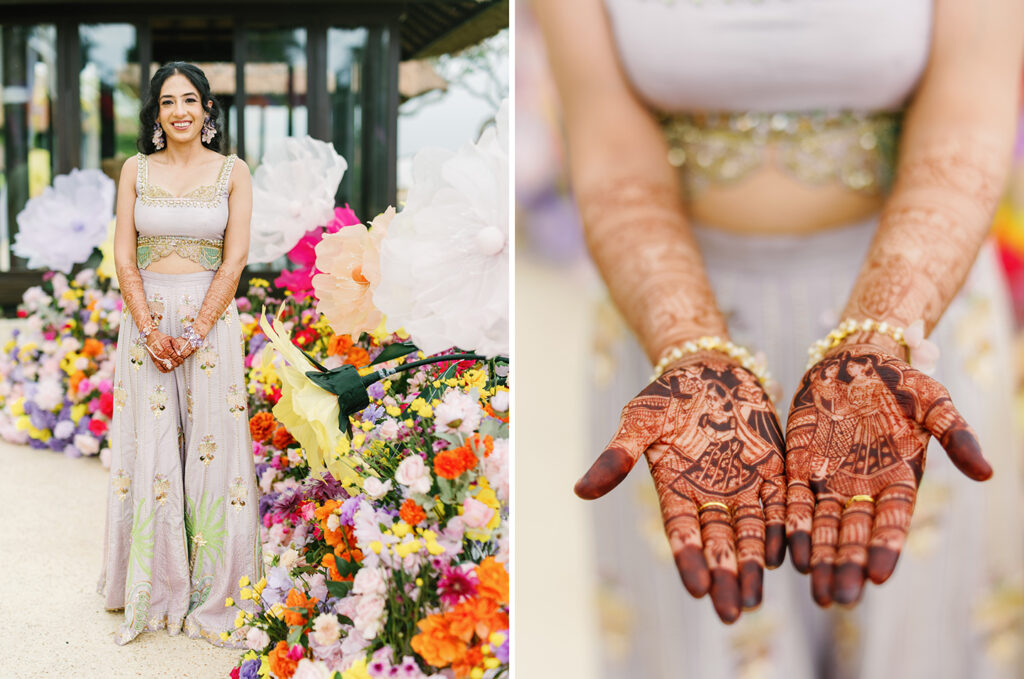
Saloni sat for hours as the henna was applied — hands extended, nearly motionless, while the room moved gently around her. Family members came and went. Conversations overlapped. The atmosphere was soft in a way that resort venues rarely manage to hold.
This is one of the ceremonies that requires the most patience to photograph well. Nothing is happening quickly. Moments are small and quiet and easily missed. But they accumulate — the way someone leans in to look more closely at the henna, the way a mother watches from a few feet away, the way the light falls across intricate patterns that took hours to create.
Mehendi is a pause before everything intensifies. And photographing it well means understanding that the stillness itself is the story.
Haldi: Unfiltered and Close
Haldi carries a completely different energy.
There is no distance in Haldi. Family members apply turmeric directly — it is tactile and immediate and emotionally raw in a way that other ceremonies are not. Laughter and tears can coexist in the same moment. Things happen quickly and do not repeat.
At Conrad Bali, the light during Haldi was everything. Natural, diffused, falling across faces and hands in a way that made the images feel less like wedding photography and more like documentary.
These are the frames that tend to be the most meaningful — not because they are beautiful, but because they are true.
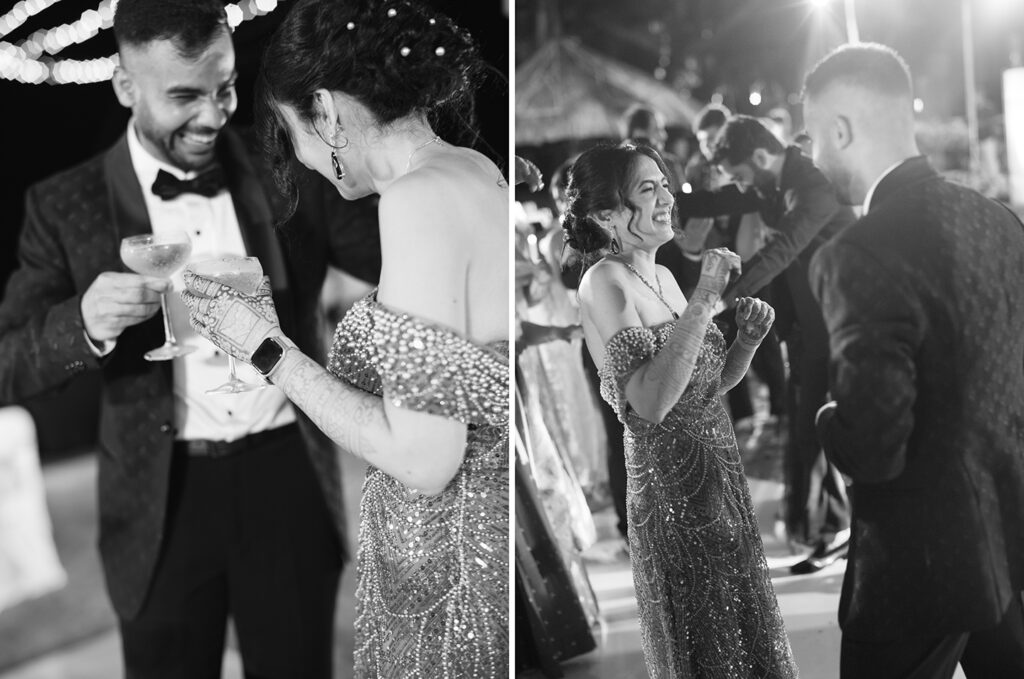
Sangeet: The Night Everything Opened Up
If Mehendi and Haldi are about closeness and intimacy, Sangeet is about release.
The energy shifted completely that evening. Music filled the space. Both families performed — not for the camera, not for anyone in particular, but for each other. The choreography was planned; what it produced was not.
The best Sangeet moments happen between the performances — in the audience watching, in the reaction that crosses someone’s face during a speech, in the child who has completely abandoned the program and is doing something entirely their own in the corner of the room.
We moved through the whole evening trying to stay inside the energy rather than observe it from outside. When Sangeet works, it generates its own light. This one did.
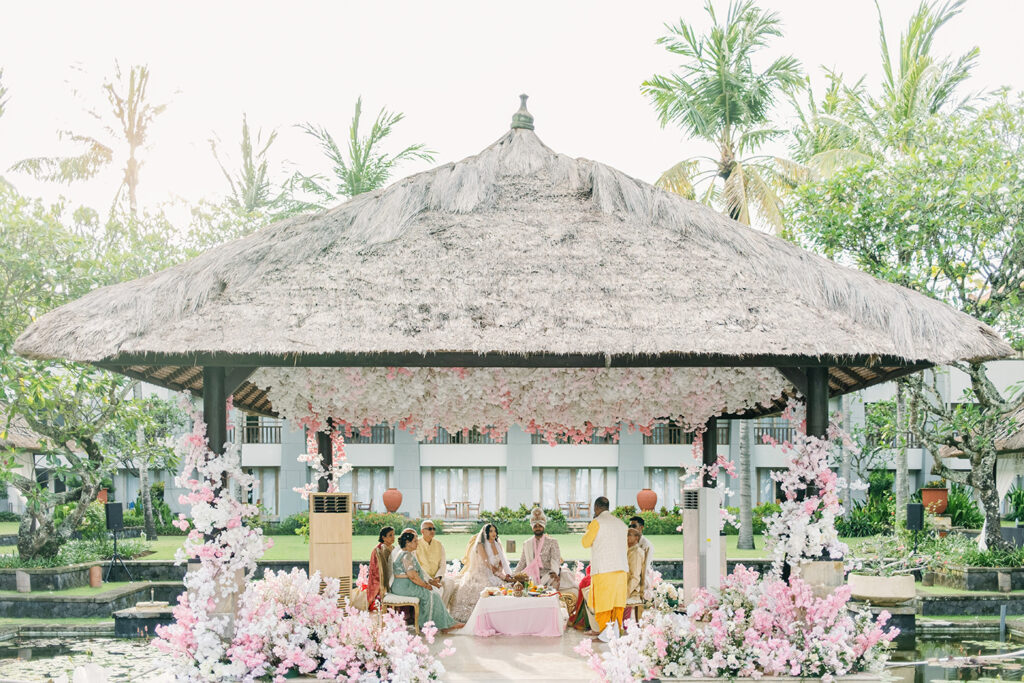
The Ceremony: Everything Slows Down
The ceremony took place by the ocean at Conrad Bali.
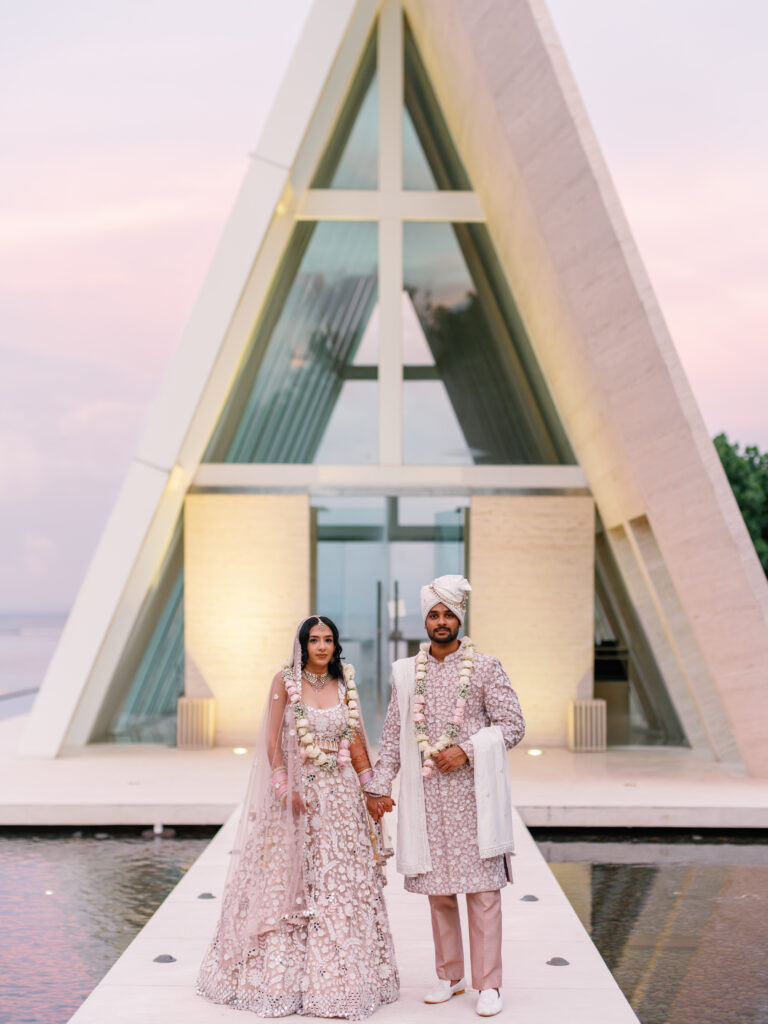
Conrad Bali’s Infinity Chapel — open-sided, facing the water — creates a particular atmosphere for an Indian wedding in Bali. Natural light. Open space. A sense of scale that does not overwhelm the ritual itself.
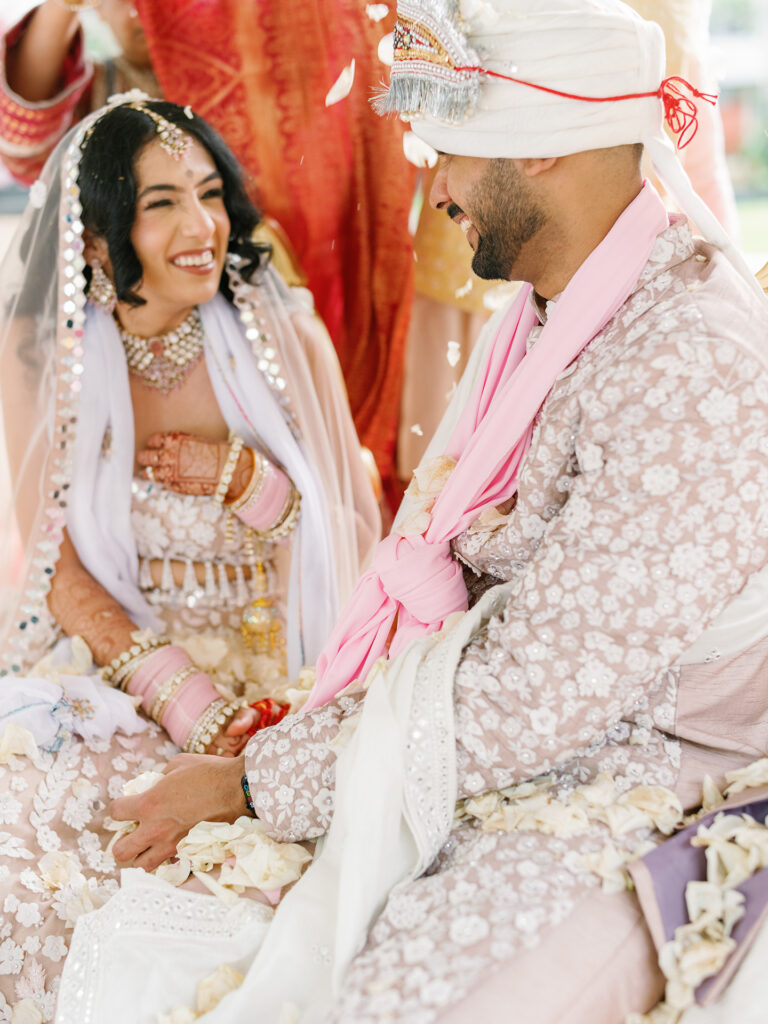
As Saloni walked toward the mandap, the room changed. Not dramatically, but noticeably. Rohit’s expression shifted. Conversations fell quiet. The weight of what was happening became impossible to ignore.
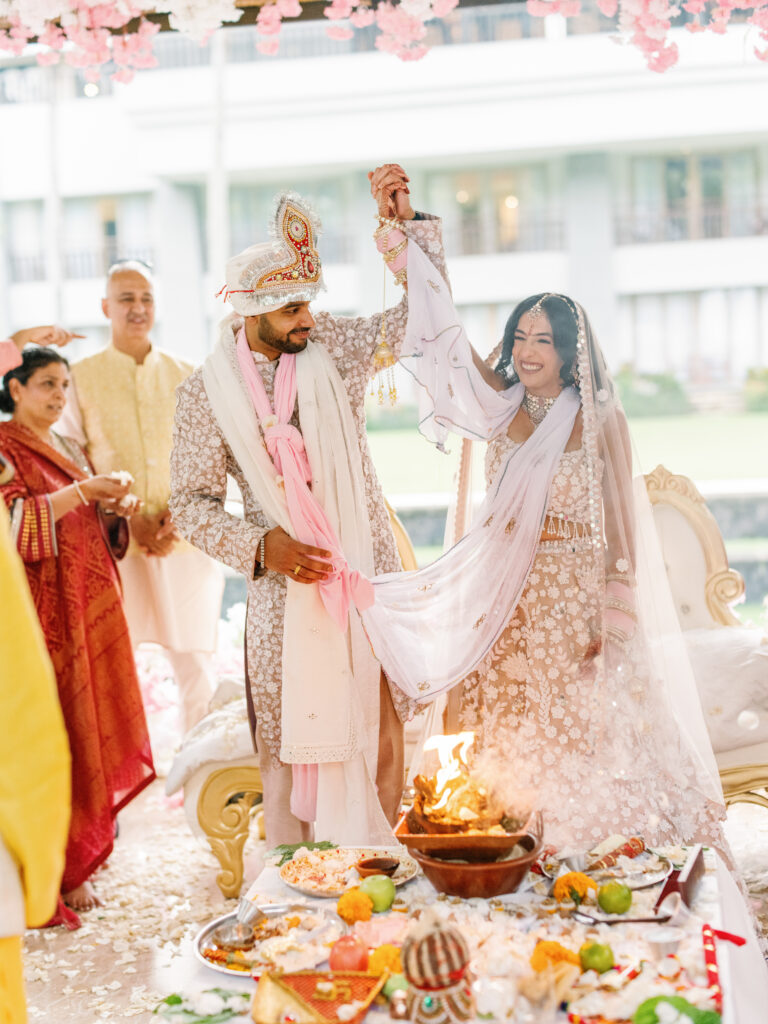
The key rituals unfolded at their own pace — Varmala, with the playful family competition that almost always accompanies it; Kanyadaan, where the emotional charge of the entire celebration seemed to compress into a single gesture; Saptapadi, seven deliberate steps that turned the ceremony from something being performed into something real.
By the time Sindoor and Mangalsutra completed what Kanyadaan had begun, the marriage was made.
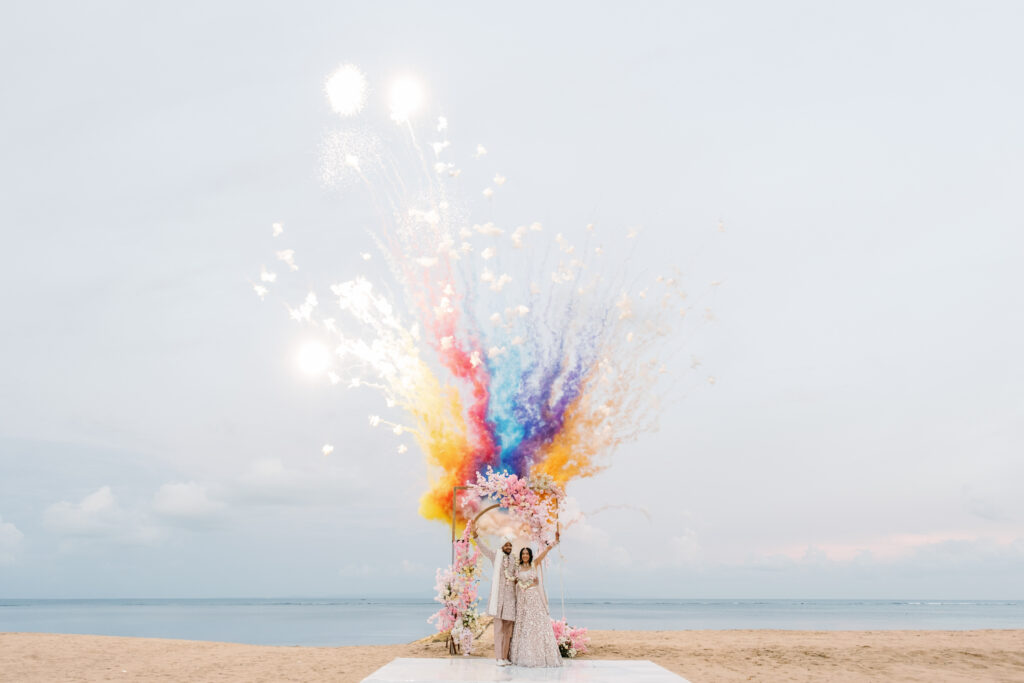
Reception: A Different Rhythm
The reception introduced a new atmosphere — more refined, more structured, but still alive.
Lighting softened. The setting became more elegant. And yet the energy from the days before had not dissipated — it had changed shape. Speeches carried the emotion of everything that had come before. Laughter arrived easily. The celebration continued with a different rhythm, completing the story that had been building across several days of this Indian wedding in Bali.
On Photographing an Indian Wedding in Bali
Indian weddings are technically demanding — rapid lighting changes, fast-moving moments, bold color palettes, ceremonies that shift emotional register without warning.
At Luxima, our approach is documentary first. We do not direct the wedding. We read it. We understand the structure of a multi-day Indian celebration well enough to anticipate where the next real moment is coming from — and we position ourselves to receive it rather than create it.
The images that last from Saloni and Rohit’s Indian wedding in Bali are not the ones anyone planned. They are the ones that happened in the spaces between plans.
That is what we are always trying to find.
Planning a Luxury Indian Wedding in Bali?
If you are in the early stages of planning an Indian wedding in Bali and want to understand what is possible — in terms of venues, flow, and photography — we are happy to have that conversation.
Explore the full portfolio from Saloni & Rohit’s wedding: luximawedding.com/portfolio/saloni-rohit/
Or reach out directly: luximawedding.com/connect/
FAQ
How much does a luxury Indian wedding in Bali cost?
Most luxury Indian weddings in Bali range from $30,000 to $150,000+ depending on guest count, venue, and the number of ceremony days. Conrad Bali weddings typically sit in the upper range due to the property’s scale and services.
Why is Conrad Bali a popular choice for Indian weddings?
Conrad Bali offers the combination of scale and flexibility that multi-day Indian weddings require — large ballrooms for Sangeet, beachfront ceremony spaces, and on-site accommodation for guests traveling internationally.
How many days does an Indian wedding in Bali typically run?
Most Indian destination weddings in Bali run across 2–4 days, covering Mehendi, Haldi, Sangeet, the ceremony, and reception. Saloni and Rohit’s celebration followed this arc across several days.
What should I look for in an Indian wedding photographer in Bali?
Experience with Indian wedding rituals and timing is essential — not just general wedding photography experience. A photographer who understands the emotional structure of each ceremony will capture what actually happened, not just what it looked like.
Explore more Indian wedding stories:
Indian Wedding Ceremony in Bali: Rituals, Flow & What to Expect


