
Saloni & Viren — A Hindu Indian Wedding in Vancouver, Canada
There are weddings you photograph and move on from.
And there are weddings that stay with you — not because of the venue, not because of the light, but because of the people inside them.
Saloni and Viren’s wedding was the second kind.
A three-day Hindu Indian celebration in the Vancouver area, held in December when the Pacific Northwest was deep into its grey, quiet winter. No tropical light. No ocean breeze. Just the kind of cold that settles into everything — and somehow, a warmth inside every room that made none of that matter.
At the time, I was based in Vancouver.
Luxima did not exist yet. I was Lucky Junansa — a photographer building his craft, shooting weddings across British Columbia, learning what it means to document a celebration that carries the weight of culture, family, and tradition all at once. The years I spent in Vancouver shaped everything that came after. The way I move in a room. The way I read a moment before it happens. The way I understand that the most important photograph of a wedding day is almost never the one anyone planned for.
Saloni and Viren were local. Their family was local. And they were looking for a photographer who would not just show up — but who would understand what a three-day Hindu Indian wedding actually means.
Being Based in Vancouver — What That Gave Me
I know the light in the Fraser Valley in December.
Flat. Diffused. Grey in a way that feels heavy until you learn to work with it — and then it becomes one of the most forgiving, most honest kinds of light there is. No harsh shadows. No blown-out skies. Just a soft, even quality that wraps around everything and lets faces be exactly what they are.
I know what it means to drive out toward Langley through morning fog, camera bags in the back seat, and arrive at a home that already smells like a celebration has been going on for days.
Those years in Vancouver were not separate from the photographer I became. They were part of the formation of it. And Saloni and Viren’s wedding — this particular combination of Hindu ritual, intimate guest count, and December light in British Columbia — is one of the clearest examples of what that formation looked like in practice.
Three Days, One Story
Indian weddings do not fit into a single afternoon.
They are built across days — each one with its own energy, its own rituals, and its own emotional register. To photograph them well, you have to understand that each day is not a warmup for the next. Each day is complete in itself.
Saloni and Viren’s wedding followed a traditional arc across three days — Mehendi, Sangeet, and the Hindu ceremony itself. Each one felt different. Each one was worth being fully present for.
Day One: Mehendi
The Mehendi ceremony was held at the family home.
This is not unusual for intimate Indian weddings in Canada — and for a celebration of this size, it was exactly right. The home held everything the ceremony needed: family nearby, food already being prepared in the kitchen, and a sense of ease that no rented venue can fully replicate.
Saloni sat for hours as the henna artist worked — hands extended, nearly motionless, while conversations moved around her like water around a stone. Family members came and went. Someone brought chai. The smell of home-cooked Indian food drifted through the house.
That is the detail I still think about.
I have photographed Indian weddings in resort ballrooms, in destination venues, in spaces designed specifically to host celebrations of this scale. But there is something about a home Mehendi — something about the informality of it, the domesticity of it — that carries a different kind of intimacy.
Nobody is performing. Nobody is on. The family is just together, and the henna is just being applied, and the wedding has quietly, gently begun.
As a photographer, these are the moments I try hardest not to disturb. I move slowly. I stay near the edges. I wait for the light to find the right angle, and I let the room be what it is.
The images from that first day are some of my favourites from this entire wedding.


Day Two: Sangeet
The energy shifted completely by the second evening.
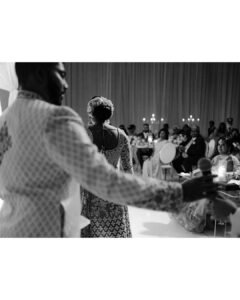
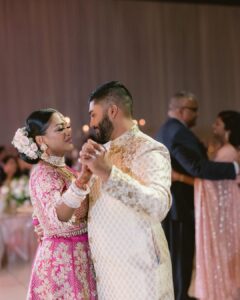
Sangeet is where everything becomes loud and alive — and this one was no exception. Music, dancing, performances from both families, the kind of laughter that fills a room and refuses to leave.
For a wedding of this intimacy, the Sangeet felt surprisingly full. Not in size — the guest count was modest, intentionally so — but in energy. The people who were there were really there. Present. Engaged. Performing for each other with the kind of commitment that only comes from people who have known each other for years.
I photographed the whole evening trying to stay inside the energy rather than observe it from a distance. When the dancing starts at a Sangeet, you cannot be timid. You move with the room, you anticipate the moments before they happen, and you accept that some of the best frames will come from the spaces between the planned performances — a glance between siblings, someone wiping their eyes during a speech, a child who has completely lost track of the program and is doing their own thing in the corner.
December light outside. Everything warm inside.
That contrast is something I carry with me from this wedding — the particular quality of a celebration that is generating its own light.
Day Three: The Hindu Ceremony
The ceremony was everything.
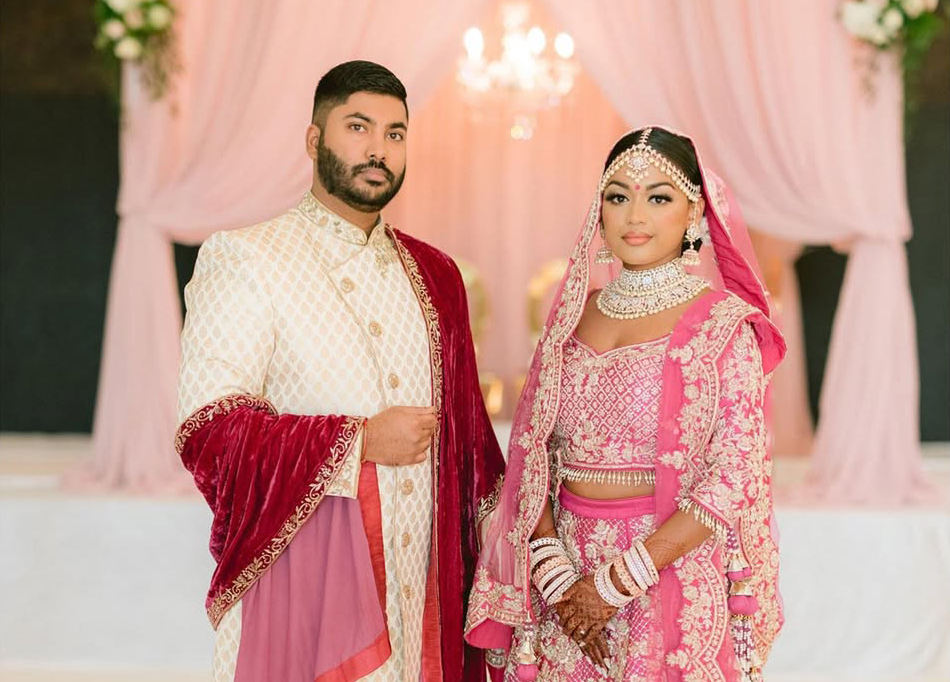
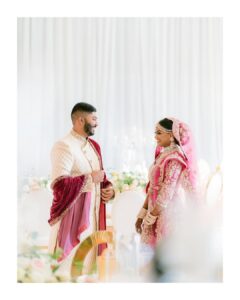
The mandap had been dressed in soft pink draping — full ceiling, full columns, the kind of setup that transforms a room into something that feels outside of time. Chandelier light above. Family seated close. The sacred fire already prepared at the centre.
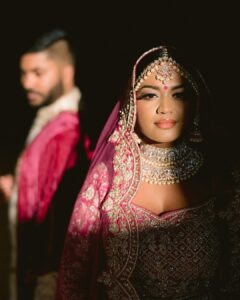
Saloni came in dressed in her full bridal look — a pink lehenga with dense gold embroidery, jewellery layered carefully across her neck and forehead, a dupatta that moved with every step. She was composed in the way brides sometimes get on the morning of the ceremony — not detached, but gathered. Like she had collected everything she needed and was carrying it quietly into the room.
Viren was waiting in cream and burgundy — sherwani with velvet detailing, the kind of look that reads formal but moves like something worn many times before.
The rituals unfolded at their own pace.
Varmala — the garland exchange — carried the playful energy it almost always does. Families on both sides competed to lift their respective person higher, making the exchange deliberately difficult. The laughter in the room was real.
Kanyadaan — the moment Saloni’s father placed her hand in Viren’s — was different. The room changed. Conversations stopped. The emotional weight of that gesture, that transfer, that blessing — it landed on everyone present at the same moment. I was watching for it and I still felt it.
Saptapadi — the seven steps around the sacred fire — was slow and deliberate. Each step a promise. Each circuit around the fire adding something to what they were building together. By the time they completed the final round, the ceremony was no longer something being performed. It had become something real.
Sindoor and Mangalsutra completed what Kanyadaan had begun. The ceremony was done. The marriage was made.

The Portrait Session at SKY Helicopters
Before the ceremony, we carved out time for portraits.
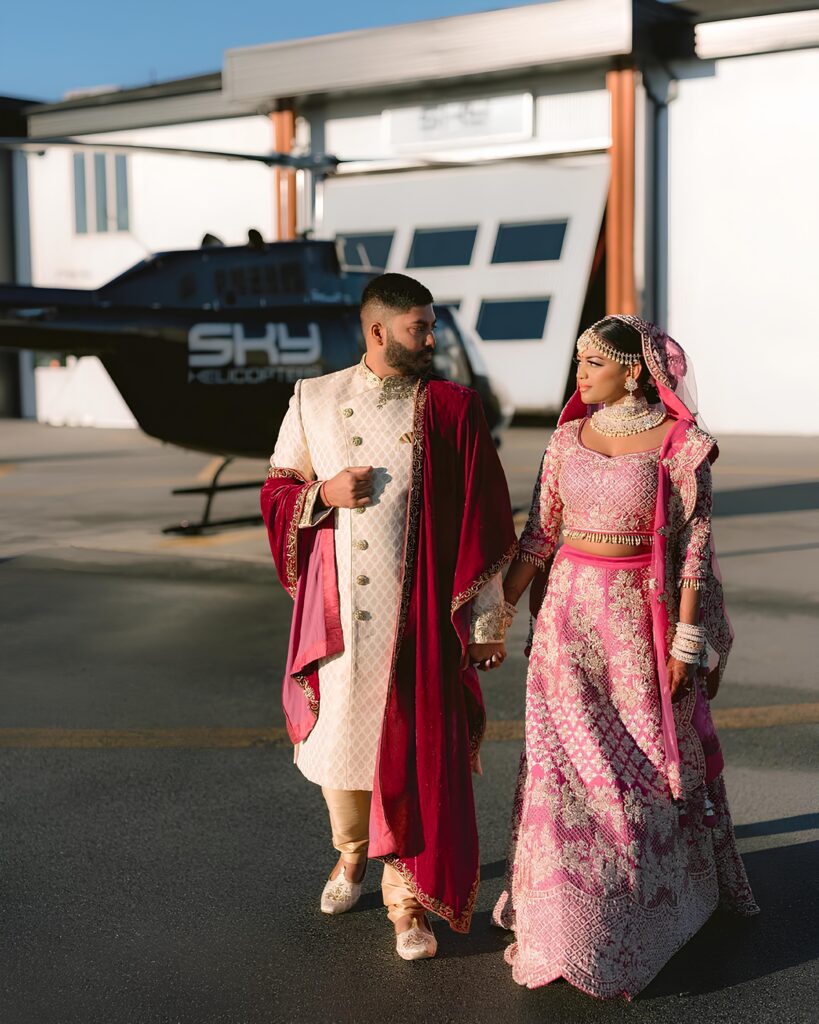
The location was SKY Helicopters in Pitt Meadows — not a traditional wedding portrait location by any measure, but exactly right for Saloni and Viren.
The tarmac. The helicopters in the background. The industrial scale of the hangar against the soft December light. And the two of them in full wedding attire, walking together with the kind of ease that only comes from people who are genuinely comfortable with each other.
There is a photograph from that session that I keep coming back to — the two of them mid-stride, not posing, Viren looking across at Saloni with an expression that I can only describe as quiet certainty. She is looking slightly ahead. The helicopter is behind them. The light is low and golden.
It is not a dramatic photograph. Nothing is happening. But it is completely true.
That is the kind of image I am always chasing.
What Those Vancouver Years Taught Me — And What They Built
I have photographed Indian weddings in Bali since building Luxima — at Conrad Bali, at resort venues in Nusa Dua, at properties designed specifically to hold celebrations of this scale. Those weddings carry their own magic.
But Saloni and Viren’s wedding in Vancouver is part of what made all of that possible.
The years I spent in Canada — photographing weddings like this one, learning how to move inside multi-day Indian celebrations, understanding the emotional architecture of rituals I had not grown up with — those years became the foundation of everything Luxima stands for today.
The rituals are the same wherever they happen. The emotional weight of Kanyadaan is the same whether it unfolds in Bali or in British Columbia. The laughter during Varmala does not change based on geography. The fire at the centre of the Saptapadi burns the same.
What changes is the context. The setting. The particular mix of people who are local or who flew in from somewhere else.
For Saloni and Viren, their wedding was intimate by design. A small guest count. A home Mehendi. A ceremony held with people who knew them well.
That intentionality — that clarity about what they actually wanted — is one of the most beautiful things a photographer can be given to document. And it is exactly the kind of wedding that shaped the photographer I became before Luxima had a name.

Why This Matters for Luxima Today
Luxima is a Bali-based wedding photography brand.
But the photographer behind it spent years in Canada first — documenting Indian weddings, winter celebrations, and intimate multi-day ceremonies across British Columbia before ever building a brand around that experience.
That history is not a footnote. It is the reason Luxima understands Indian weddings the way we do.
We know the rituals. We know the timing. We know the emotional structure of a Hindu ceremony — not from reading about it, but from having stood inside dozens of them, in living rooms and ballrooms and mandaps dressed in pink draping, waiting for the moment that cannot be staged.
For couples planning an Indian wedding in Bali — or anywhere in the world — that depth of experience is what we bring to the table.
We have done it before. In Vancouver. In Bali. And everywhere in between.
A Final Word About the Food
I need to say this.
Somewhere between the Mehendi and the Sangeet, someone handed me a plate of homemade Indian food.
I have eaten well at a lot of weddings. Catered receptions, resort dinners, elaborate wedding banquets. But there is something about home-cooked food at an Indian wedding — made by family, in the actual family kitchen — that exists in a completely different category.
That plate of food is one of the highlights of my time photographing weddings in Vancouver.
I still think about it.
Vendor Credits
Photography: Luxima Wedding
Location: Langley / Pitt Meadows, British Columbia, Canada
Portrait Session: SKY Helicopters, Pitt Meadows BC
Explore more Indian wedding stories:
Saloni & Rohit — Indian Wedding at Conrad Bali
Indian Wedding Ceremony in Bali: Rituals, Flow & What to Expect
Indian Wedding in Bali: Complete Guide


