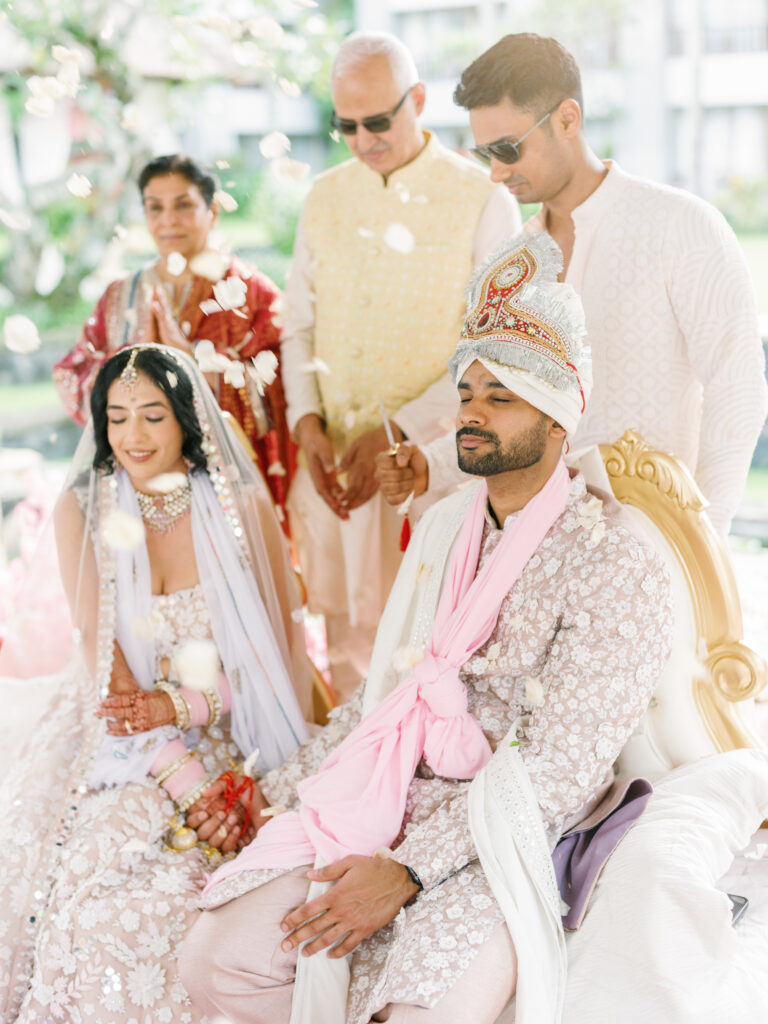
An Indian wedding ceremony in Bali is never just a single event.
It unfolds over days — not in a rigid sequence, but in a rhythm shaped by people, emotion, and tradition.
What makes it different in Bali is not just the setting, but the way each ritual is allowed to breathe. There is less urgency. Less compression. And because of that, each moment tends to land more deeply — not just for the couple, but for everyone present.
I have documented Indian wedding ceremonies in Bali across multiple days and multiple celebrations. What I have learned — what the camera has taught me — is that these rituals are not backdrop moments. They are the whole story. And they deserve a photographer who understands what each one means before it begins.
Why Bali Works for Indian Wedding Ceremonies
Indian weddings are multi-day celebrations. They require space — physical and emotional — for each ritual to unfold without feeling rushed.
In Bali, Indian weddings are rarely compressed into tight timelines. Venues like Conrad Bali are designed to hold multiple events across several days — large ceremony spaces, beachfront options, ballrooms for Sangeet — all within one property. Families and guests stay connected. Events flow without the friction of moving between locations.
This changes how the wedding feels. There is space between moments. Conversations linger longer. And rituals are experienced more fully, rather than simply completed.
The Flow of an Indian Wedding Ceremony in Bali
Every Indian wedding is different. But most multi-day celebrations in Bali follow a similar arc. Here is what each day typically holds — and what actually happens inside it.
Day 1: Mehendi
The celebration begins with the Mehendi ceremony.
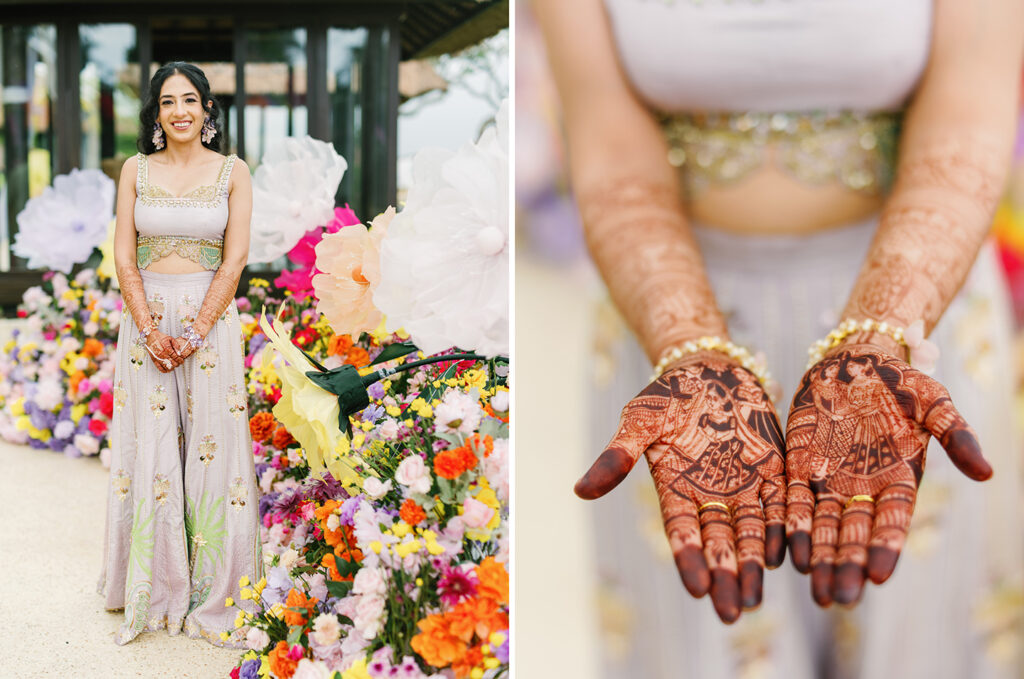
This is the most intimate part of the wedding — small, relaxed, and centered around the bride. Henna is applied in intricate patterns across her hands and feet. Family members gather closely. Conversations happen without any fixed structure.
The bride often sits for hours as the henna is applied — unable to move freely, while family drifts in and out around her. It is in these in-between moments that the atmosphere settles. Not everything is happening at once. And that stillness becomes part of the memory.
In Bali, this moment feels even more unhurried than usual. The surroundings encourage slowness. Guests who have traveled far begin to settle in, and the wedding quietly takes shape before anyone realizes it has started.
For me, Mehendi is one of the richest ceremonies to document. It is full of detail — the henna patterns, the hands, the expressions — but also full of the kind of quiet connection that disappears the moment you try to direct it. The camera has to earn its place in the room here.
Day 2: Sangeet
The energy shifts completely on the second day.
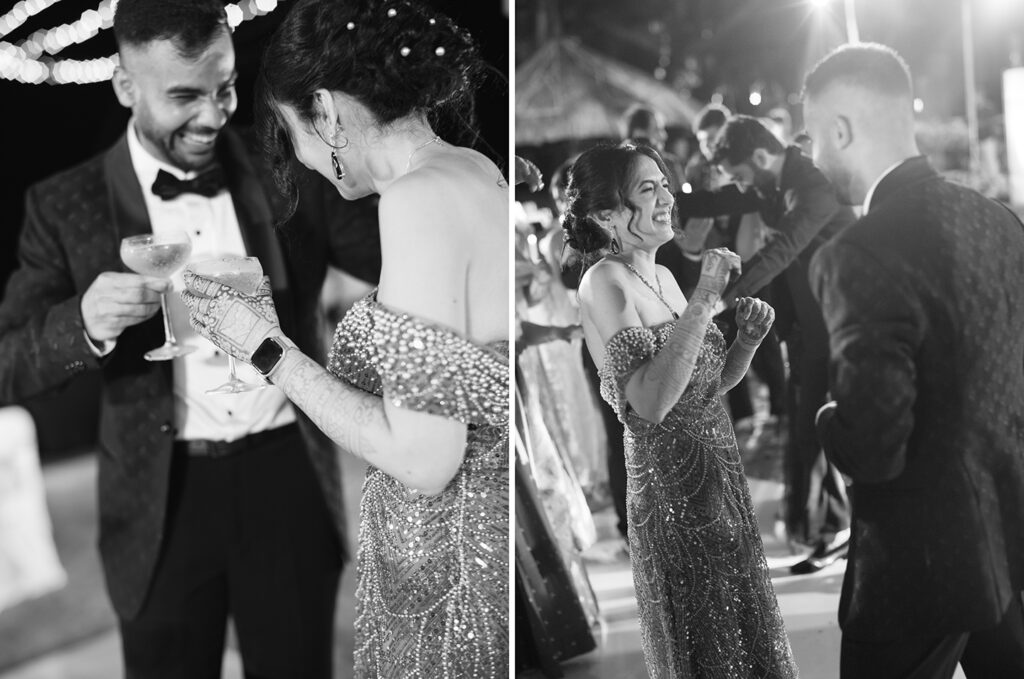
Sangeet is where the celebration becomes loud, expressive, and alive. Music and dance performances take over the evening. Families from both sides participate — not just as guests, but as performers. There is laughter, rehearsed choreography, and moments of complete spontaneity that nobody planned for.
For photographers and videographers, Sangeet is one of the most technically demanding events of the entire wedding. Lighting changes fast. Emotions move faster. A moment happens and disappears in two seconds.
What I have learned from photographing Sangeet nights in Bali is this: the best frames almost never come from the stage. They come from the audience — a reaction, a parent watching their child perform, two cousins who have not seen each other in years laughing until they cannot stand up. You have to keep one eye on the performance and one eye on everyone else.
Day 3: The Wedding Ceremony
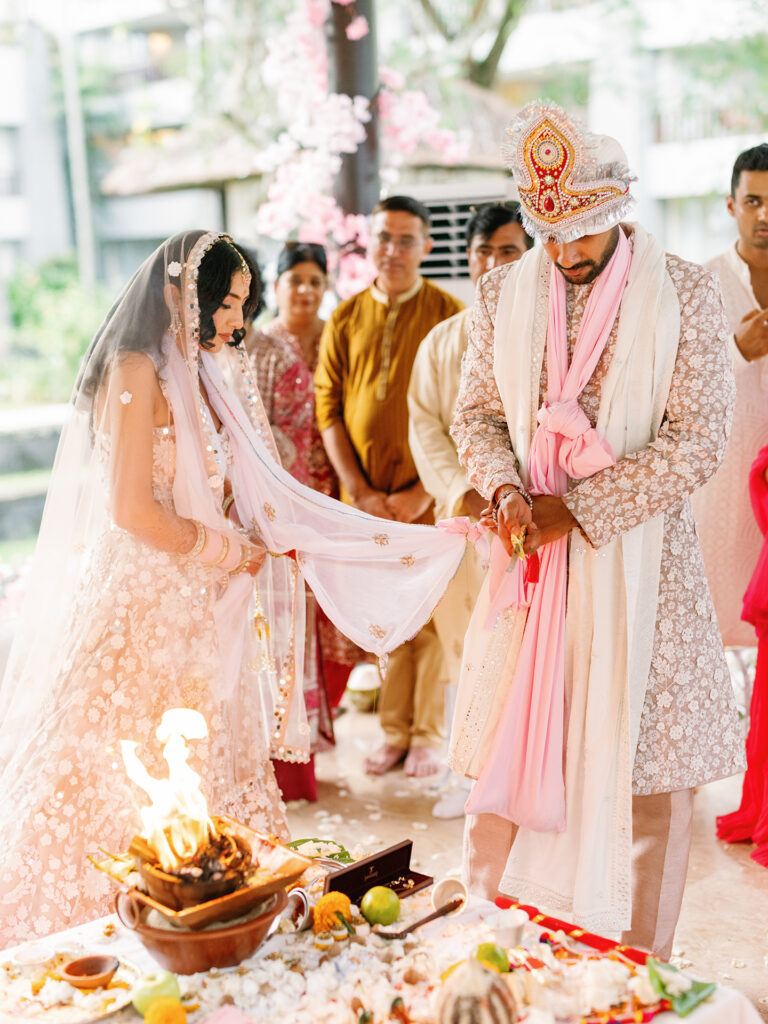
The ceremony itself is the emotional core of the entire celebration.
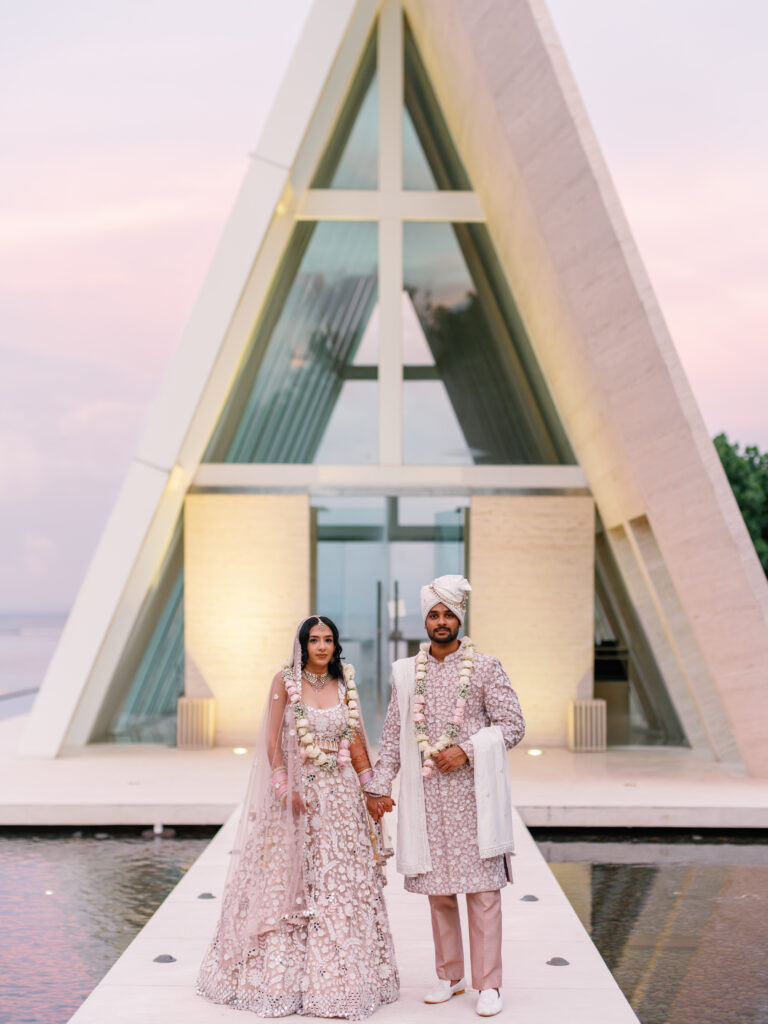
At venues like Conrad Bali, the Infinity Chapel creates a setting that feels outside of time — open-sided, facing the ocean, natural light falling across the mandap. The space does not compete with the ritual. It holds it.
The key rituals of a Hindu Indian wedding ceremony include:
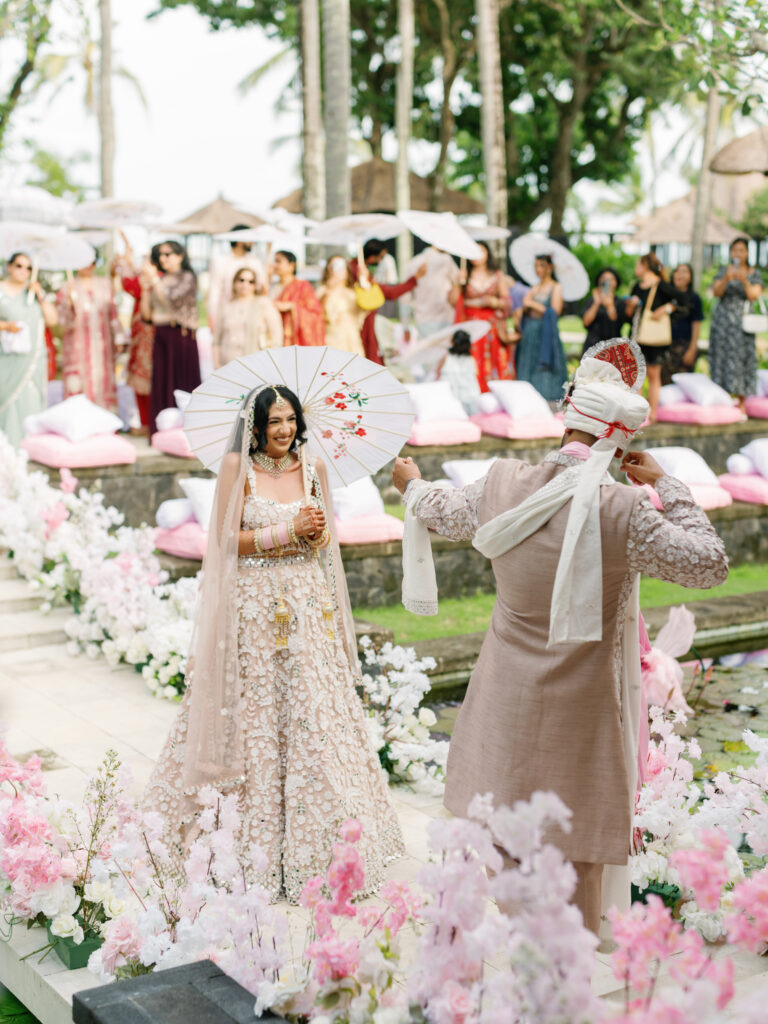
Varmala (Garland Exchange) The bride and groom exchange flower garlands, symbolizing their acceptance of each other. It is often filled with playful energy — families lifting each side to make the exchange more difficult, laughter breaking through the formality. As a photographer, this is the moment I tell second shooters to watch both directions at once. The best frame is rarely on the couple.
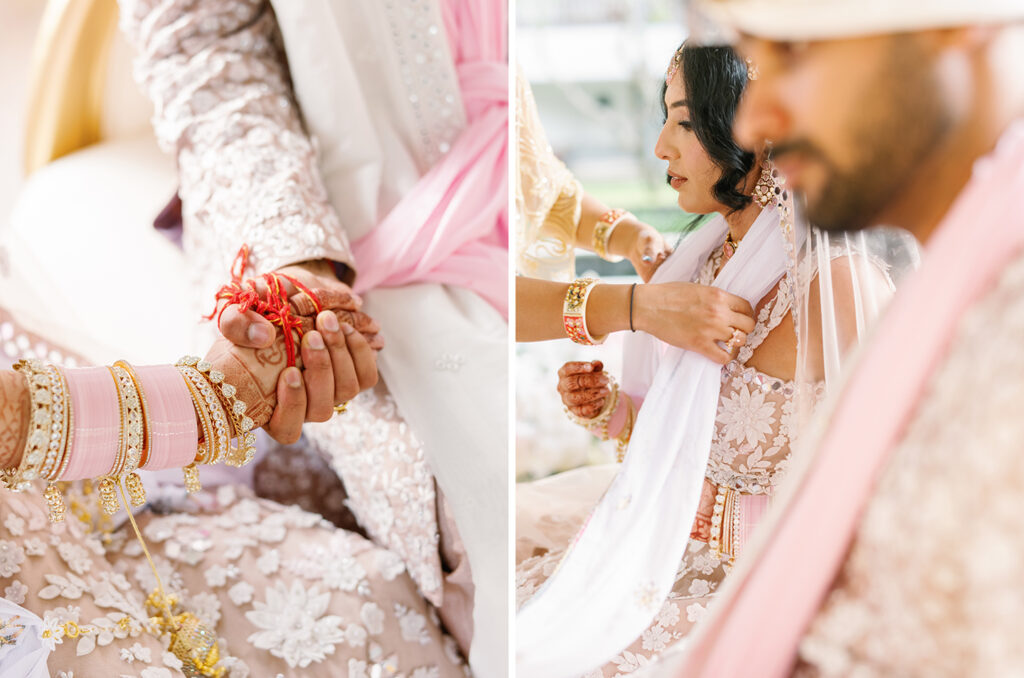
Kanyadaan One of the most emotionally significant moments of the ceremony. The bride’s father places her hand in the groom’s, symbolizing the giving away of his daughter. The atmosphere shifts before anyone says a word. Conversations fall quiet. The weight of what is happening becomes impossible to ignore. This is the moment I position for weeks in advance — because it comes fast, and it does not wait.
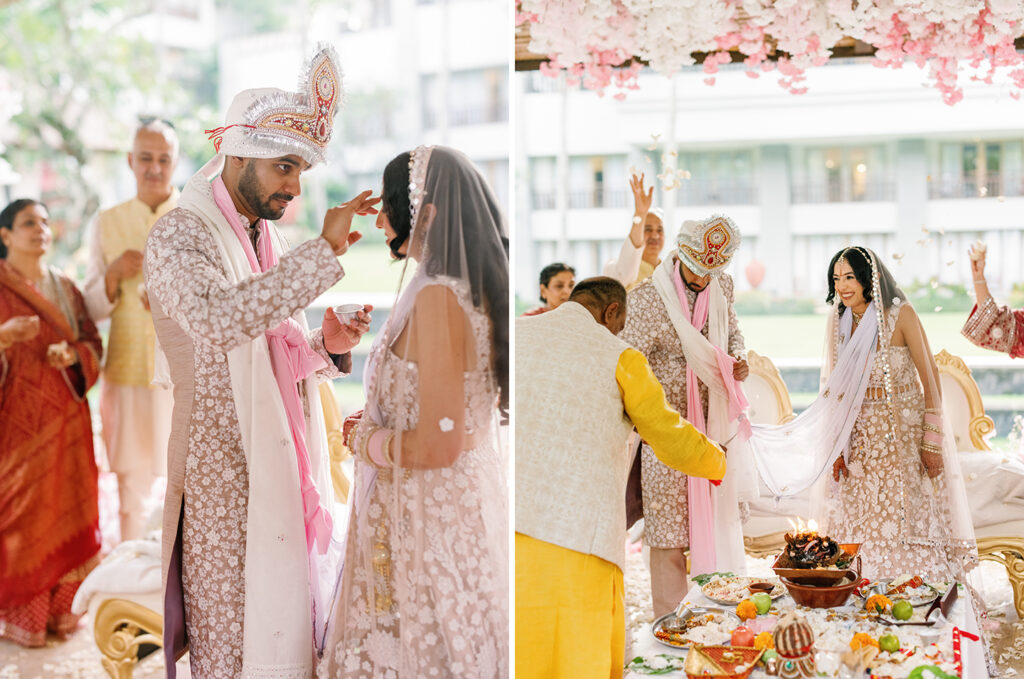
Saptapadi (Seven Steps) The couple walks seven steps together around the sacred fire, each step representing a promise — for food, strength, prosperity, wisdom, children, health, and friendship. This is the ritual that completes the marriage. By the time they complete the final round, everything that came before — the Mehendi, the Sangeet, the energy of three days — has earned this moment.
Sindoor and Mangalsutra The groom applies sindoor (red powder) to the bride’s hairline and places the mangalsutra (sacred necklace) around her neck. The ceremony is complete.
What Makes an Indian Wedding Ceremony in Bali Different
Destination weddings carry a different kind of intimacy.
When guests travel across the world to be present, the atmosphere shifts. People are more present. More attentive. Less distracted by the routines of everyday life. For an Indian wedding ceremony, this changes the emotional register of every ritual.
The Kanyadaan hits differently when the bride’s father has just flown eighteen hours to be there. The Sangeet energy is different when every person in the room chose to be there. Even the pauses between rituals feel different — more intentional, more earned.
In Bali, surrounded by a landscape that naturally slows everything down, that feeling is amplified. There is also an unpredictability to Indian weddings that becomes more visible in a destination setting. Delays happen. Emotions shift. Plans adjust in real time. In Bali, these moments are not rushed past — they are absorbed into the flow of the day, and they often become some of the most meaningful parts of the experience.
What to Look for in a Photographer for an Indian Wedding Ceremony
Photographing an Indian wedding ceremony in Bali requires more than technical skill. It requires cultural awareness.
Knowing when a ritual is about to begin. Understanding where to position without interrupting the flow. Recognizing the emotional shift before it becomes visible on anyone’s face.
These are things that cannot be learned from a brief. They come from experience — from having stood inside these ceremonies before and understood what each moment means, what comes next, and where the camera needs to be before it happens.
At Luxima, I have documented Indian wedding ceremonies in Bali at Conrad Bali and internationally, including multi-day Hindu celebrations in Canada. Every wedding is different. But the emotional architecture of Indian ceremonies follows patterns that reward deep experience — and punish guesswork.
If you want to see how an Indian wedding ceremony in Bali actually unfolds from Mehendi to the final ritual, you can explore a real celebration documented by Luxima here:
Saloni & Rohit — Indian Wedding at Conrad Bali
It is a full story — from the first day to the ceremony — documented in the way each moment deserves.
Planning Your Indian Wedding Ceremony in Bali
If you are in the early stages of planning, here are the things that actually matter:
Choose a venue that understands scale. Indian weddings need space — for guests, for décor, for the flow of multiple ceremonies across multiple days. Nusa Dua resorts like Conrad Bali are built for this. The infrastructure is there. The coordination experience is there. The difference between a venue that understands Indian weddings and one that does not becomes visible within the first hour of Day 1.
Work with vendors experienced in Indian weddings specifically. Not every planner or photographer in Bali has documented a multi-day Indian celebration. Ask directly. Ask how many they have done. Ask which rituals they have covered. The answer will tell you everything.
Build buffer time into every day. Indian weddings run on emotion, not schedules. The best moments almost always happen between ceremonies — not during them. A day that has no room to breathe will lose its best photographs before lunch.
Brief your photographer on your family’s specific rituals. Even an experienced Indian wedding photographer benefits from knowing which customs your family follows, how your family does Kanyadaan, whether your Sangeet runs with a fixed program or open floor. A thirty-minute briefing before each day makes a significant difference in what gets captured.
For a full planning resource covering venues, costs, and the complete ceremony structure, read this: Indian Wedding in Bali: Complete Guide (2026)
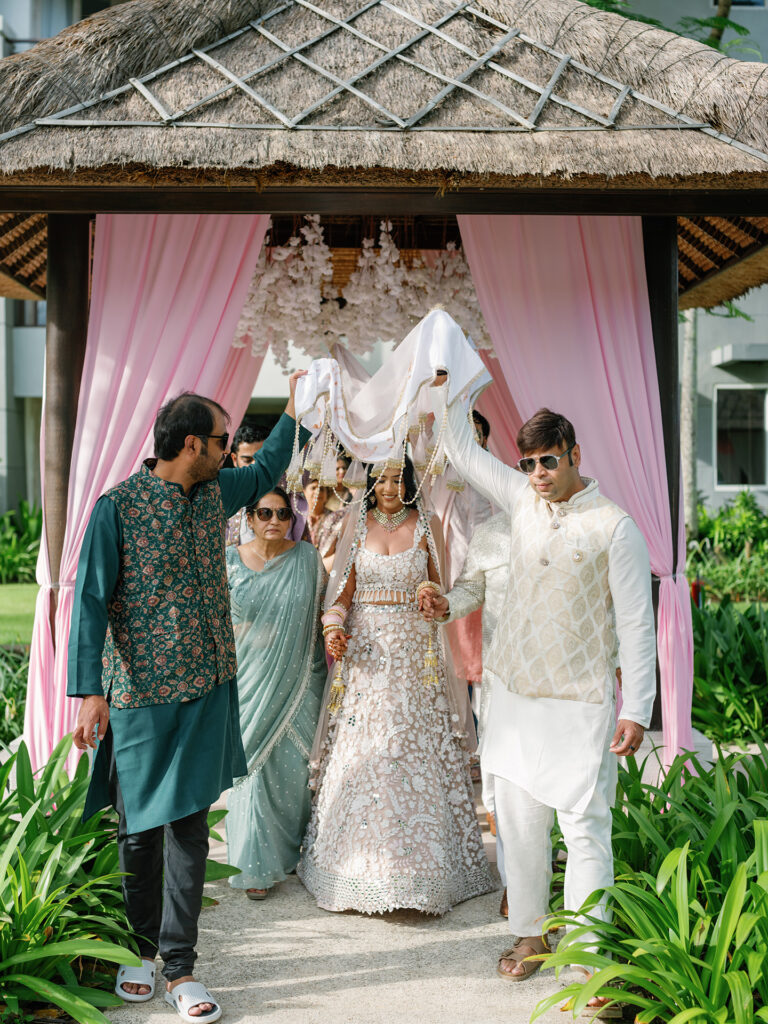
A Final Word
An Indian wedding ceremony in Bali will not look the same as one in Mumbai, London, or Sydney.
It will feel different — shaped by the destination, by the intimacy that comes from traveling together, and by the particular atmosphere Bali creates around every celebration that happens here.
That difference is not something to manage or minimize. It is something to understand, and to photograph honestly.
If you are planning an Indian wedding in Bali and want it documented as it truly unfolds — with cultural understanding, without staging, without interruption — I would love to hear about your celebration.
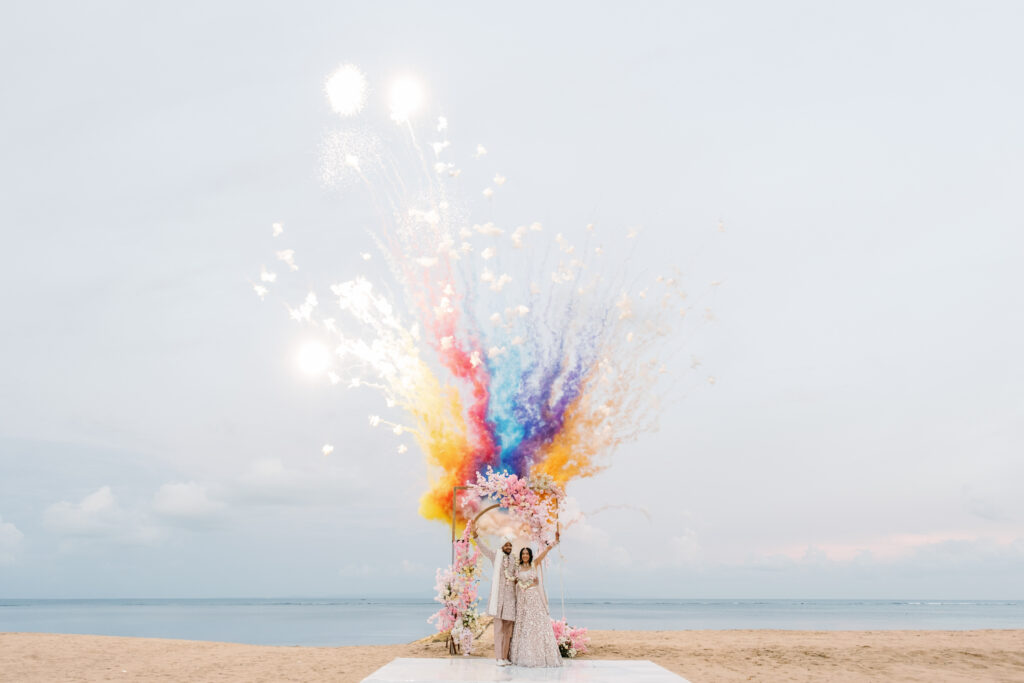
Explore more Indian wedding stories from Luxima:
Saloni & Rohit — Indian Wedding at Conrad Bali
Saloni & Viren — Hindu Indian Wedding in Vancouver
Indian Wedding in Bali: Complete Guide (2026)